
|
ASSESSMENT 2 PART B BRIEF |
|
|
Subject Code and Title |
NUTR2001 Human Nutrition 1 |
|
Assessment |
The Role of Macronutrients in Health |
|
Individual/Group |
Individual |
|
Length |
Report: 1500 words +/-10% |
|
Learning Outcomes |
a) Describe and distinguish the complex nature of human digestion with specific reference to macronutrient absorption
b) Define and discuss the structure of the macronutrients and their biological role in human metabolism
c) List and recall recommended intakes and dietary sources of the various macronutrients
d) Demonstrate an understanding of the contributing factors that may lead to states of excess, insufficiency or deficiency of macronutrients
e) Recognise and interpret signs and symptoms associated with states of excess, insufficiency or deficiency of macronutrients |
|
Submission |
Due by 11:55pm AEST/AEDT Sunday of Module 5.2 (Week 10). For intensive class: By 11:55pm AEST/AEDT Sunday end of Week 5 / Module 5.1 |
|
Weighting |
40% |
|
Total Marks |
100 marks |
Context:
This assessment is aimed at developing the student’s understanding of all of the macronutrients and the role they play in human metabolism.
By prescribing this assessment, students are able to build on their understanding of the importance of nutrition in relation to human physiology and health. This assessment allows students to further advance their skills in sourcing and identifying reliable and credible information, which they will incorporate into their written work. Students are able to develop their academic writing skills, as they are expected to express their ideas in a coherent and
logical manner, while also enhancing their critical analysis skills, through interpretation and translation of the informationresearched.
Instructions:
Students are to discuss all of the following macronutrientslisted below, and in a 1500- word report, define and describe the macronutrients in terms of:
• The composition of themacronutrients
• The biological functions
• Dietary sources
• Recommended Daily Intake (RDI)
• Factors contributing to states of excess
• Factors contributing to states of insufficiency and deficiency
• Signs and symptoms
Macronutrients:
• Protein
• Carbohydrates
• Lipids
Referencing:
It is essential that you use appropriate APA style for citing and referencing research. Please see more information on referencing here
http://library.laureate.net.au/research_skills/referencing
Sources:
Students should use at least five (5) reputable resources in their report.
Information may be sourced from primary, secondary and tertiary sources: o Primary sources: original research articles, systematic reviews and meta-analysisfrom high quality journals, peer reviewed journals.
o Secondary sources: general review articles, summaries, abstracts of primary source articles.
o Tertiary sources: recognised, authoritative textbooks.
Submission Instructions:
Students to submit via the Assessment link in the main navigation menu in NUTR2001 Human Nutrition 1. The Learning Facilitator will provide feedback via the Grade Centre in the LMS portal. Feedback can be viewed in My Grades.
See the attached format for how to structure your report.
How to Write a Report
The purpose of writing a report is to present information which can be described or analysed. The key differences between writing a report and an essay; are that an essay provides opportunity for exploration of ideas which can be expanded on in a lot more detail. A report on the other hand is more prescriptive in its structure and the language that is used. This means that your writing style needs to be concise and clear. Reports are broken up into headings and subheadings, can include tables, graphs and diagrams; and information can be presented in dot point form where appropriate.
The following is a basic report structure which can be used to successfully complete this assessment task.
Introduction
This section requires you to provide background information on the topic you have chosen to investigate (including historical context, surrounding changes in our understanding), the purpose of your report, and what information your report will contain. This section is to be written in complete sentences and paragraphs. It does not to contain any dot point information or tables, graphs and diagrams.
Body of Report
This section will be broken up into a series of subheadings which will address each of the key areas you are required to research for your topic. The majority of these sections should be written in complete sentences and paragraphs however, you can include graphs, diagrams and tables that may be appropriate. Ensure that you title these clearly, in the correct way, and reference using the APA system where necessary. Tables, graphs and diagrams can also be added in an appendix at the end of your report, and when doing this, you need to clearly state where the item can be located. Generally, information presented in this format does not
count towards your overall word count. Some information may be presented in dot point, however if the majority of your information is set out in this way it makes it difficult to evaluate your level of understanding for each area being researched.
Conclusion
This section brings together all of the information that you have presented in your report, and links back to your introduction any information that adds value to our overall understanding of the topic. You can also discuss any areas which have been identified as requiring further research or investigation and how this will work to improve or change our understanding of the topic. This section does not introduce or discuss any new information specifically, and like the introduction, will be written in complete sentences and paragraphs. No tables, graphs, diagrams or dot points.
References
After the body of your report, you should list your references. You will need to list them in alphabetical order using the surname of the author, as per the APA 7th Edition format. Please ensure that you list all the resources you have used throughout the report, including any items in the Appendix.
Appendix
Here you can include information which you may have referred to specifically throughout your report, but were unable to include directly into the report (usually due to limited word count). You need to ensure that anything you include here is clearly titled and easily identifiable as to where it relates within your report.
Word Count
Word count must be clearly displayed on the title page or cover sheet. Required word count does not include text appearing in the title page, abstract, reference list or appendices, but does include in-text citations, the body of the text, headings and tables*. Tables, graphs, and figures should be included as Appendices at the end of your assignment, and should not substitute the amount of information or discussion in the body of the academic submission, and should not consist of more than 10% of the total assignment word count. If you have any queries please consult with your lecturer before you complete and submit your assessment.
|
Word Count Excess |
Penalty |
|
10-20% |
5% of the total mark |
|
More than 20% |
10 % of the total mark allocated for every 10% over the stated word count down to a minimum of 50% |
*unless otherwise suggested in the assessment brief
APA Referencing
A link to the Academic Writing and Referencing Guide can be found here https://library.torrens.edu.au/learn-more/referencing
Overdue Assessments
An assessment is ‘overdue’ when it is not submitted by the due date or by the agreed extension date. For each calendar day (i.e. 24 hours) the assessment is late, a loss of 10% of the total possible marks will occur up to a total of five calendar days, after which a zero mark will be recorded. Arrangements for an assessment extension is available to students with unexpected or extenuating circumstances.
(see Application for Assessment Special Consideration form)
Learning Rubric: Assessment 2 Part B Final Report
|
Assessment
Attributes
Grade Description (Grading Scheme) |
Fail (Unacceptable)
0-49% |
Pass
(Functional)
50-64% |
Credit
(Proficient)
65-74% |
Distinction
(Advanced)
75 -84% |
High Distinction
(Exceptional)
85-100% |
|
Evidence of unsatisfactory achievement of one or moreof the learning objectives ofthe course, insufficient
understanding of the course content and/or unsatisfactory level of skilldevelopment. |
Evidence ofsatisfactory
achievement of courselearning objectives, the developmentof relevant skills to a competent level, and adequate
interpretation and critical analysisskills. |
Evidence of a good level of understanding, knowledge and skill development in relation to the content of the courseor work of a superior quality onthe majority of the learning
objectives of thecourse.
Demonstration of a high levelof interpretation and critical analysisskills. |
Evidence of a high level of achievement of the learning objectives of the course
demonstrated in such areas as interpretation and critical analysis, logical argument, useof methodology and
communication skills. |
Evidence of an exceptionallevel of achievement of learning objectives across the entire content of the course
demonstrated in such areasas interpretation and critical analysis, logical argument, creativity, originality, use of methodology and
communication skills. |
|
|
Knowledge and Understanding
40% |
Limited understanding of the topic. Key areashave not been addressed. |
Demonstrates knowledge of the assigned topic,and is able to summarise information, which highlights a basic
understanding of the content. |
Thorough understanding of the topic, and demonstrates a capacity to explain and apply relevant concepts. All key areas have been addressed. |
Highly developed understanding of thetopic. Has addressed all key areas of the assessment in detail and demonstrated a capacity to clearly explain all relevant concepts. |
A sophisticated understanding of the topic. Has addressed all of the key concepts in detail and demonstrated a capacity to add insight and further
understanding to the concepts explored. |
|
Content
40% |
Text contains limitedfacts and examples related to the topic. |
Text providesfacts,
definitions, details and
examples that attemptto develop and explain the topic. |
Text providesrelevant facts, extendeddefinitions, concrete details and examples that develop and explain the topic. |
Text providesrelevant facts, extendeddefinitions, concrete details and examples that sufficiently develop and explain the topic. |
Strong application of
information, which is presented expertly and authoritatively. Text provides significant and relevant facts, extended
definitions, concrete details and examplesthat are
thoroughly developed. |
|
Structure
10% |
Has not been written in
accordance to academic genre. Is difficult to understand and is lacking in flow of ideas and line of reasoning.
Poorly written witherrors in spelling and grammar. |
Is written in accordanceto academic genre and have accurate spelling, grammar, sentence, and paragraph
construction.
Information and evidence are presented in amanner that is not consistently clear and logical. |
Is well written andadheres to academic genre.
Information is well presented, and demonstrates a clearflow of ideas and easy tofollow line ofreasoning. |
Is very well written and adheres to academic genre. Information and evidence are well presented
in a clear and logicalmanner. Evidence expertly supports and developsideas.
Audience is engaged and demonstrates cultural
sensitivity. |
Expertly written and adheres to the academic genre.
Demonstrates a sophisticated flow ofideas which engages and sustains audience’s
interest. |
|
Substantiation 10% |
Demonstratesinconsistent use of good quality, credible and relevant research sources to support ideas. APA referencing has errors or not been used consistently. |
Demonstrates consistent used of credible and relevant
research sources to support and develop ideas, although these are not consistently explicitor well developed. There are no mistakes using APA referencing style. |
Demonstrates consistent use of high quality, credible and relevant research sources to support and develop ideas. There are no mistakes using APA referencing style. |
Consistently demonstrates expert use of high quality, credible and relevant sources to supportwriting. Demonstrates evidence of reading beyond the key texts.
There are no mistakes using APA referencing style. |
Demonstrates expert use of high quality, credible and relevant sources, which develop andsupport ideas in a
sophisticated manner.
Extensive evidence of reading beyond key texts. There are no mistakes using APA
referencing style. |
NUTR2001 HUMAN NUTRITION
Executive summary
The macronutrients are required for the development of the human body and require the ingestion and uptake of them. The uptake of the nutrients is required along with the levels of the uptake. The deficiency and excess of macronutrients are assessed in this report as the diseases are caused by them. Signs and symptoms are associated with the deficiency and excess of macronutrients which are identified in the study.
Macronutrients play an important role in the human body as those help in the development and growth of the body. “Carbohydrates, proteins and lipids” are selected as the main three macronutrients which are supported as the energy of the human body. Diseases are developed due to deficiency and excessive intake of macronutrients.
Assessment 2: Part B
Introduction
The present report has been developed on the analysis of the absorbing macronutrients and the nature of those substances. The structure of those macronutrients such as "carbohydrates, proteins and lipids" has been identified, and the biological functions of those macronutrients have been identified. In addition, the recommended dietary intake of the macronutrients and their sources has been identified in the present report. Therefore, the study critically analysed and discussed macronutrients which are valuable for a human being. The deficiency or excessive absorption of those nutrients may cause issues that are identified in the present study. The identified health issues of the deficiency or excessive intake of macronutrients have been identified and listed here.
Discussion
The complex nature of human absorption for absorbing macronutrients
The survival of human beings is dependent upon the absorption of macronutrients by the human digestive and assimilatory systems. The major macronutrients required for the survival and well-being of human beings are proteins, lipids and carbohydrates. The absorption of macronutrients occurs in the small intestine of human beings, which requires for providing energy to human beings along with the basic requirement of the immune system (Suganya et al., 2020). The proteins are absorbed in the small intestine and are broken down into polypeptides and peptides, which are easily absorbed in the "microvilli" of the small intestine. The enzymes are required for the digestion and absorption of macronutrients, and the various enzymes involved in the digestion are amylases, trypsin,
lipases, proteases, peptidases and pepsin present in the stomach of human beings.
The proteases and peptidases do protein digestion in the stomach and pancreas of the human. However, the digestion of the proteins mainly occurs in the pancreas, where pancreatic enzymes trypsin and chymotrypsin are involved in the digestion of the proteins (Lunnoo et al., 2019). The majority of macronutrient absorption occurs in the small intestine. However, the digestion of carbohydrates is initiated in the mouth while chewing the food. The major enzyme that helps the digestion of carbohydrates is amylases in the mouth's saliva and pepsin in the stomach (Hijo et al., 2019). The digestion of carbohydrates leads to the formation and absorption of disaccharides and monosaccharides, which are absorbed in the liver, pancreas, and small intestine. The glucose absorbed is stored in the blood, and the enzyme which regulates the glucose levels in the blood is insulin, a pancreatic enzyme. Fat digestion occurs in the stomach, and the
bile does its absorption via the emulsification process (Hughes & Holscher, 2021). The fats are digested into the long-chain and short-chain fatty acids, where the long chain is absorbed in the lymph system as chylomicrons. The short and medium-chain fatty acids are absorbed into the bloodstream via the microvilli of the small intestine as they are soluble in water.
The structure of the macronutrients and their biological functions in human metabolism
Proteins are the major source and important macronutrients which are required for the development of human beings. Proteins are involved in the foundation and making of the basic structures for the development of the human being, for example, enzymes (Jenner et al., 2018). The enzymes are required for the catalysis of biological reactions like digestion and absorption of macronutrients. The proteins are made up of amino acids, made up of amino and a carboxylic acid group which polymerizes to form peptides. The grouping of the peptides, along with the changes in the configuration and conformation, leads to the formation of the protein structure (Senior et al., 2019). The other major macronutrient required, along with the proteins for human development, is carbohydrates.
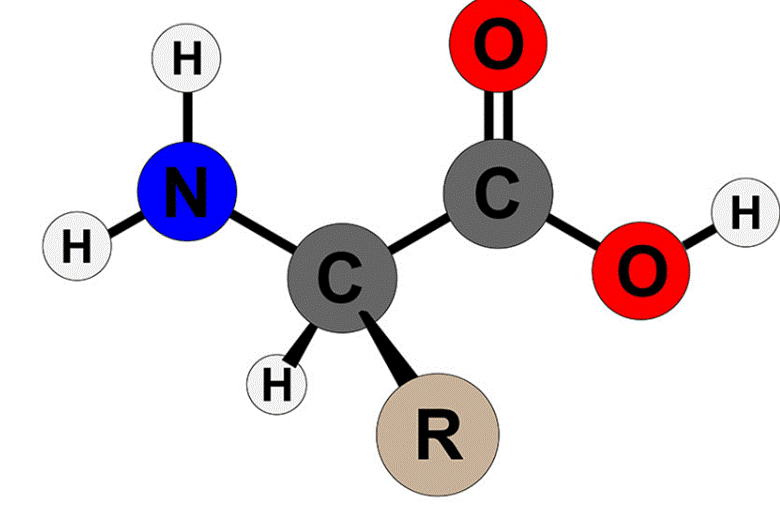
Figure 1: Structure of the amino acid
Source- Themedicalbiochemistrypage.org, 2022
The major components of the structure of carbohydrates are sugars, such as glucose and fructose, which are bound by the glycosidic bonds to form disaccharides and polysaccharides. The polysaccharides are made by the linear and branched forms of the glycosidic bonds of the sugars. Fats are the more complex macronutrients, often fatty acids, glycerols, and alcohol. The fatty acids are bound to the glycerols by the ester linkages, and they are involved in the formation of triglycerides. The polymerization of triglycerides leads to the formation of fats required to provide energy to human cells and carbohydrates. The human cells get their energy from the consumption, digestion and assimilation of fats and carbohydrates, which are stored in the liver, bloodstream, and pancreas adipose cells.
Recommended daily intake and dietary sources of the macronutrients
Macronutrients are required for the development of human beings, and regular intake of these macronutrients is necessary. The major macronutrients considered for the study are proteins, lipids, and carbohydrates. Doctors and dieticians must advise the minimum and daily uptake of the macronutrients, which helps build immunity and provide energy to human beings (Goldsmith et al., 2022). Carbohydrates are required to provide energy and help in the daily activities of human beings. The minimum requirement is 40 to 65 per cent, and recommended is 50 to 75 per cent for both women and men (as referred to in the appendix). The ingestion of rice and bread can do the daily uptake of carbohydrates, pulses, and cereals.
The ingestion and uptake of proteins contribute to the structure of the human being, and the body structures are made by the proteins such as enzymes. Humans are required for the daily uptake of proteins, and dieticians need to advise the standard levels of protein uptake. The standard uptake of the protein needs to be between 10 to 35 per cent, which will prevent the deficiency in the protein. The deficiency of the protein leads to many health complications, which compromises the health of human beings. However, the intake of fats needs to be checked by dieticians and doctors to ensure the health of human beings. The standard uptake of fats needs to be less than 30 grams of saturated fat for men and 20 grams for women. The controlled uptake of fats is advised as fats absorption leads to an increase in the cholesterol amount in the human body. From the research studies, it has been observed that the rise in cholesterol leads to the onset of cardiac diseases.
Factors leading to excess, insufficiency or deficiency of the macronutrients
The factors leading to the excess and insufficient micronutrients lead to the onset of major diseases. The macronutrients are responsible for the development and growth of human beings and require their uptake in a daily routine. The major macronutrients required for the development of the human being are proteins, fats and carbohydrates. The deficiency of the protein leads to various diseases, and one of the major diseases is the Kwashiorkor disease. The disease is associated with human malnutrition, often leading to the degradation of the human structure and malformation of the body structure (Bracci et al., 2022). Protein deficiency is often associated with carbohydrate deficiency, which causes detrimental effects on the human body. The major disease associated with the disease is hypoglycemia, a lowering of blood glucose levels. Hypoglycemia often becomes detrimental to the human body leading to malnutrition and causing
fatality due to brain stroke.
Excess macronutrients are also harmful to the human body and must be considered for the study. Excess fat ingestion can lead to detrimental effects on the human body, including cardiovascular diseases, like angina, artery and veins blockage, and a decrease in the lumen of the arteries due to cholesterol deposition on the linings. The high intake of carbohydrates leads to hyperglycemia and high glucose levels in the blood. The increase in blood glucose levels leads to diseases that often affect the body's functions, like renal function. The excesses and deficiencies of these macronutrients need to be checked.
Signs and symptoms associated with excess, insufficiency or deficiency of the macronutrients
The signs and symptoms are associated with excess and deficiency of the macronutrients like carbohydrates, proteins and lipids (fats). Excess blood sugar leads to signs such as increased thirst and frequent urination, which are major causes that lead to loss of eyesight. The blood glucose levels need to be controlled with guidance from the dietician. The deficiency of carbohydrates leads to hypoglycemia which is associated with losing balance and appetite. Excess fat and lipid leads to increased weight and major health complications like cardiac diseases. The major symptom associated with excess fat intake is the prevalence of high blood pressure in humans. The deficiency of the protein leads to loss of the body structure leading to malnutrition. The sign and symptom associated with protein deficiency is a malformation of the human body parts.
Conclusion
It is concluded that the identified macronutrients are absorbed in the small intestine of the body, which helps in growth along with triggering the immune systems of human beings. In addition, the digestion of proteins occurs in the pancreas, and the breakdown of glucose has been developed in the mouth. It is concluded excessive intake of macronutrients is as risky as deficiency of the macronutrients. Obesity is identified as the most common disease due to excessive intake of macronutrients. It is concluded cardiovascular disease is also triggered by excessive absorption, and “Marasmus” is caused by severe deficiency of macronutrients. In addition, body weights are reduced due to loss of muscle mass which causes bone fractures. Therefore it is concluded from the above discussion that the issues are rising due to the reduction of amounts of macronutrients in human beings.
Reference
Websites
Themedicalbiochemistrypage.org, 2022. Biochemical Properties of Amino Acids. Retrived on 23rd November 2022. Retrieved from: https://themedicalbiochemistrypage.org/biochemical-properties-of-amino-acids/
Researchgate.net, 2021. Daily intake of proteins, carbohydrates and lipids. Retrived on 23rd November 2022. Retrieved from: https://www.researchgate.net/figure/The-percentage-participation-of-proteins-carbohydrates-and-fats-in-the-energetic-value_tbl1_299944510
Journals
Bracci, E. L., Keogh, J. B., Milte, R., & Murphy, K. J. (2022). A comparison of dietary quality and nutritional adequacy of popular energy-restricted diets against the Australian guide to healthy eating and the Mediterranean diet. British Journal of Nutrition, 128(7), 1357-1370. DOI 10.1017/S0007114521002282
Godswill, A. G., Somtochukwu, I. V., Ikechukwu, A. O., & Kate, E. C. (2020). Health benefits of micronutrients (vitamins and minerals) and their associated deficiency diseases: A systematic review. International Journal of Food Sciences, 3(1), 1-32. . doi:10.1016/j.jand.2012.01.026.
Goldsmith, J. A., Holman, M. E., Puri, P., Khalil, R. E., Ennasr, A. N., & Gorgey, A. S. (2022). The interaction of macronutrients and body composition among individuals with chronic spinal cord injury. British Journal of Nutrition, 1-12. DOI 10.1017/S0007114522001830
Hijo, A. H. T., Coutinho, C. P., Alba-Loureiro, T. C., Leite, J. S. M., Bargi-Souza, P., & Goulart-Silva, F. (2019). High fat diet modulates the protein content of nutrient transporters in the small intestine of mice: possible involvement of PKA and PKC activity. Heliyon, 5(10), e02611. https://doi.org/10.1016/j.heliyon.2019.e02611
Hughes, R. L., & Holscher, H. D. (2021). Fueling gut microbes: a review of the interaction between diet, exercise, and the gut microbiota in athletes. Advances in Nutrition, 12(6), 2190-2215. https://doi.org/10.1093/advances/nmab077
Jenner, S. L., Trakman, G., Coutts, A., Kempton, T., Ryan, S., Forsyth, A., & Belski, R. (2018). Dietary intake of professional Australian football athletes surrounding body composition assessment. Journal of the International Society of Sports Nutrition, 15(1), 43. https://doi.org/10.1186/s12970-018-0248-5
Kopp, W. (2019). How western diet and lifestyle drive the pandemic of obesity and civilization diseases. Diabetes, metabolic syndrome and obesity: targets and therapy, 12, 2221. doi: 10.2147/DMSO.S216791
Lieberman, H. R., Fulgoni III, V. L., Agarwal, S., Pasiakos, S. M., & Berryman, C. E. (2020). Protein intake is more stable than carbohydrate or fat intake across various US demographic groups and international populations. The American journal of clinical nutrition, 112(1), 180-186. https://doi.org/10.1093/ajcn/nqaa044
Lunnoo, T., Assawakhajornsak, J., & Puangmali, T. (2019). In silico study of gold nanoparticle uptake into a mammalian cell: interplay of size, shape, surface charge, and aggregation. The Journal of Physical Chemistry C, 123(6), 3801-3810. http://dx.doi.org/10.1021/acs.jpcc.8b07616
Mousa, A., Naqash, A., & Lim, S. (2019). Macronutrient and micronutrient intake during pregnancy: an overview of recent evidence. Nutrients, 11(2), 443. https://www.mdpi.com/2072-6643/11/2/443/pdf
Oliphant, K., & Allen-Vercoe, E. (2019). Macronutrient metabolism by the human gut microbiome: major fermentation by-products and their impact on host health. Microbiome, 7(1), 1-15.https://microbiomejournal.biomedcentral.com/articles/10.1186/s40168-019-0704-8
Senior, A. M., Solon-Biet, S. M., Cogger, V. C., Le Couteur, D. G., Nakagawa, S., Raubenheimer, D., & Simpson, S. J. (2019). Dietary macronutrient content, age-specific mortality and lifespan. Proceedings of the Royal Society B, 286(1902), 20190393. http://dx.doi.org/10.1098/rspb.2019.0393
Shan, Z., Rehm, C.D., Rogers, G., Ruan, M., Wang, D.D., Hu, F.B., Mozaffarian, D., Zhang, F.F. and Bhupathiraju, S.N., 2019. Trends in dietary carbohydrate, protein, and fat intake and diet quality among US adults, 1999-2016. Jama, 322(12), pp.1178-1187. https://jamanetwork.com/journals/jama/articlepdf/2751719/jama_shan_2019_oi_190100.pdf
Shi, Y. N., Liu, Y. J., Xie, Z., & Zhang, W. J. (2021). Fructose and metabolic diseases: too much to be good. Chinese Medical Journal, 134(11), 1276-1285. doi: 10.1056/NEJMoa1614362
Suganya, A., Saravanan, A., & Manivannan, N. (2020). Role of zinc nutrition for increasing zinc availability, uptake, yield, and quality of maize (Zea mays L.) grains: An overview. Commun. Soil Sci. Plant Anal, 51(15), 2001-2021. https://doi.org/10.1080/00103624.2020.1820030
Appendices
Appendix 1:
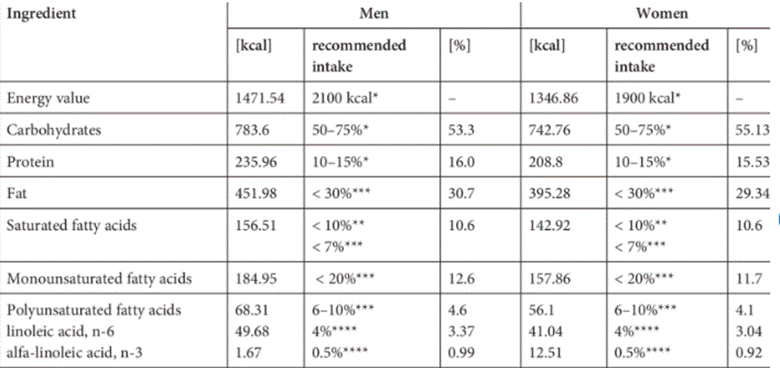
Figure: Daily intake of proteins, carbohydrates and lipids
(Source- Researchgate.net, 2021)