
Dissertation Topic: TEAM MORALE AND ITS IMPACT ON PROJECT PERFORMANCES
ACKNOWLEDGEMENT
It provides me immense pleasure to present my dissertation entitled as “TEAM MORALE AND ITS IMPACT ON PROJECT PERFORMANCES”. This topic of research has helped me to gather immense knowledge about the importance of team morale and its impact of the performances of any project.
I wish to extend most sincere gratitude for those who have helped me to lead this research work towards a reality. Firstly, I thank those who have helped me to gather data throughout the research. I would like to like to present heartiest thanks towards my supervisor who have helped me to understand this topic and have also helped me to land into a conclusion in this study. I would also like to thank my colleagues as well as my research participants who provided me with enough assistance to reach a definite goal. I acknowledge support of batch mates, supervisors as well as professors for this study and I declare to be solely responsible for shortcomings of this research.
Abstract
Research goals and their measurement: The introduction of this present chapter evaluates the importance of doing the present chapter. The aim, research objectives, and research questions of the study have been comprehensively explained here. The purpose of the research objective is to evaluate the research variables in the present section. The hypothesis of the study has been explained with three separate sections in this research analysis. A matter of semantics and evaluative
discussion with the variables has been performed in the present analysis. Discussion on the subjective variables, estimation of the relationship within the various variables, and the main perspective of implementing automotive tools into the improvement of team morality have been comprehensively discussed in the present research chapter.
Primary research is performed in the study that indicates survey questionnaire of 60 respondents who have experience in teamwork. Total 100 samples are selected randomly whereas due to budget and time management, 60 participants are selected here. Issues that are associated with questionnaire are issue of false answer, in-depth analysis and issue and time management for respondents. Other analytical, tools include bar chart, cost-benefit analytical techniques and others. Reliability and validity are maintained properly to safeguard the data and achieve accurate results.
Test methodology, along with sourcing materials that includes morale related issues for employees are selected. Effectiveness of writing proper dissertation is mentioned in this study that helps in selection of risk issues associated with conduction of this research. COSHH matrix table is mentioned to determine risk factors that have created problems in this research along with mentioning of future perspective. Based on this analysis, other objectives that can be developed here are mentioned properly.
The data have been analysed with the help of Chi-square test, Independent t test, normality analysis. Test of normality have suggested on a normal distribution of the data. Independent test value was t=-1.898 thus depicting that there is less significance mean difference between groups. The Z-score analysis has also been done in the result section. This study also discusses various ways of maintaining team effectiveness at the workplace diversifying the team structure, and providing training to the team members. The main purpose of this study is to analyse the impact of the team morale in improving the performance of the project. In this study, various statistical tests are performed for getting information about the entire study.
Table of Contents
1.2 Statement of the Research Problem
Chapter 2: The introduction chapter to the proposal
2.2 Articulation of the problem and objectives
Chapter 3: Review of the literature and theory
3.3 Ways for creating team morale in a project team
3.4 Effectiveness of team morale on employee performance
3.5 Effectiveness of team morale in managing project performances
3.6 Challenges in building team morale
3.7 Implementation of the vital factors for mitigating challenges
Chapter 4: Research goals and their measurement
4.6 Hypothesis of one variable
4.7 Hypothesis with two variables
4.9 Evaluative discussion with the help of variables
4.10 Discussion on the subject variables
4.11 No relationship between the DV and IV
4.12 Implementation of the automotive tools in improving team morality
4.13 Estimation of the levels of making measurement
4.14 Nominal data validation into the construction business
4.15 Ordinal data presentation of the construction business
4.16 Internal and ratio data into the construction
4.18 The role of money as a variable
4.19 Estimation of the three objectives with the four variables into the analysis
4.20 Summarization of the research goals and variables interconnected during the analysis
Chapter 5: The Methodology chapter; analysis, results and findings
5.2 Approaches to collecting data
5.3 Data measuring and collection
5.4 Issues mostly relevant to just questionnaires
5.7 Incorporating reliability and validity
5.8 Analysis, results and findings
Chapter 6: Laboratory experiments
6.4 Reliability and validity of findings
6.6 Laboratory recording procedures
6.7 Dissertation/project writing
6.8 Health and safety in the laboratory; COSHH and risk assessments
6.11 Examples of research proposals
6.12 Research objectives and sample findings by the author
Chapter 7: Quantitative data analysis
7.2 The process of quantitative data collection
7.3 steps in the analytical process
Chapter 8: Quantitative data analysis; descriptive statistics
8.2 Examples of the use of descriptive statistical tools
8.2.1 Calculation of descriptive statistics
8.4 Illustration of relevant descriptive statistics in charts
8.5 Normal distributions; Z scores
8.5.2 The Z score; standard score
8.6 A second variable for descriptive analysis; an IV and a DV
Chapter 9: Qualitative data analysis and inferential statistics
9.2 Probability values and three key tests: chi-square, the difference in means and correlation
9.4 Checking of the non-parametric and parametric nature of the data set
9.5 Difference in mean tests; the’t-test
9.6 Unrelated Mann-Whitney test
9.8 The parametric related t-test
9.10 Using correlation coefficients to measure internal reliability and validity in questionnaires
Chapter 10: Discussion, conclusions, recommendations and appendices
10.3 Conclusions and recommendations
Appendix 1: Factors affecting employee morale
Appendix 2: Considerations for Better Employee Morale
Appendix 3: Ways of keeping the employee morale positive
Appendix 4: value of keeping on top of staff morale
Appendix 5: Survey Questionnaires
List of Figures
Figure 3.1 Conceptual framework
Figure 4.1: Elements of morality improvement
Figure 4.2: Morality improvement strategy of construction industry
List of Tables
Table 8.1: Descriptive statistics
Table 9.2: Independent t-test for group statistics"
Table 9.5: Parametric related t-test
Table 9.8: Confidence intervals
Chapter 1: Introduction
1.1 Introduction
Team morale is not just a terminology from the point of view of explanation of philosophy of delivering a motivational talk but also shows an ethical approach to keep high bounding and understanding between the members of construction crew, who works to achieve a common goal of organization and also indirectly it reflects in projects success. Majority failure of projects is noticed due to poor communication between parties or individuals. Communication is the pioneer step which helps to keep team spirit high. Because if healthy communication among the stockholders or project parties or individual members mentioned then it reflects on their work. Also, it keeps their morale high during the work. Construction is considered one of the largest Industry after agriculture.
Similarly, just like agricultural sector this particular industry also provide highest rate of employment to the humans. But as we know human performance depends on their thinking ability which generally subjected to change from condition to condition and situation to situation. So every human could not be highly motivated all the time or positive for all situations. Behaviour of human is subjected on many factors like, family condition, work environment, place of work, satisfaction of work, relationship between subordinates etc. If a person having any issue related to personal concerns, then ultimately it effects on its confidence and morale. If morale weak then crew members outcome of work drastically affected. At this particular stage role of leader to keep crew or members motivated with high Morale value then work performance can possibly increases. So, ultimately as a result we can get better
outcome of project and performance of project. The construction made during ancient time are symbols of high team spirit and performance like Taaz Mahal, Great Wall of China, Eiffel tower of Paris and many more. Even after many decade, they are in good condition. Though during those days there was no automation or equipment’s available to simplify human work or make it bit easier. Only group of people working together to complete the task and that was not possible without team spirit and morale values. So, we can say that success of any project is teamwork and people and having right choice to assess the important factors in the successful completion of work (Spalek, 2005). Without confidence or enthusiasm one can’t performed so morale is the key for project success (Ahmad, 2014) (Dye, 2011).
There are many research articles published on this topic but without this, efficiency and work performance decrease. The definition of morale states that morale can have a bearing on one’s “willingness to perform assigned tasks”. In this study the team morale and project leadership ability has examined based on P-M theories. In this theory due to work pressure and duties the motivational aspect of a person somehow missed knowingly or unknowingly. A case study of china has explained in the well-defined manner that how reflect the influence of leadership styles on the level of team morale and project time performance in given sets of situational contingencies (J Yang and A Liu, 2010).
Employee morale is considered as feeling of well bearing (M.Kanimozhi, Vinothkumar, 2018) on the effectiveness of morale value and its effect on morale conduct.
Karen E.Mishra (1998) noted GE's team concept, in which the employer shared important information about the plant's operations with employees and addressed long-standing complaints between both the workers and management in building the trust. Employee morale can be improved by encouraging open and honest communication, taking into account the feelings and perspectives of others, and encouraging participation and risk taking in decision making. He came to the conclusion that teambuilding has a long-term positive relationship with employee morale and retention. Employee morale and retention have a long-term positive relationship when it comes to team performance, individual contributions, team evaluation, and coordination. Team unity has no discernible effect on employee morale or retention.
According to Ashraf Tag-Eldeen (2017), workplace bullying has an effect on employee morale, performance, and turnover intentions. He discovered that workplace bullying has a significant impact on a variety of organisational outcomes, including morale and intentions to leave. Other disadvantages of these practises include undermining teamwork, decreasing productivity, and increasing employee sickness, absence, and turnover rates. It also wastes time and money, degrades service delivery quality, and harms the organization's reputation.
Surya RashmitRawat (2015) discovered that leadership has an effect on employee morale and motivation, and he mentioned leadership competencies such as communication, fostering trust, and team building as examples of leadership competencies that have a clear impact on morale. It is suggested that the right match between the personality of the leader, maturity level, expertise, and mindset, as well as a lot of freezing, unfreezing, and re-freezing exercises in accordance with the working environment. As a result, he assessed the importance of leadership in terms of employee morale and motivation.
According to Fard et al. (2010), organisational commitment leads to increased organization performance and has an effect on the development of human relationships. Trust creates a foundation for security and confidence in the intentions and actions of supervisors, managers, and organisational leaders, resulting in a positive attitude, high performance, and high morale.
1.2 Statement of the Research Problem
India’s construction industry is positively influencing on the GDP and economic growth of the country. This industry plays a significant role in creating wealth and providing a better quality of life for the nation's development. Furthermore, building and infrastructure sector has emerged as one of the most important sectors of the Indian economy, surpassing other industries such as oil and gas, manufacturing, and services. Aside from that, human resources statistics show that majority of employee morale drops abruptly after the first six months on the job. There are numerous factors or elements that influence employee morale, and management must understand how to maintain and improve employee morale.
In the construction industry, one of the most important factors influencing project performance is the employee. Employees must take responsibility for managing the processes assigned to them and assisting in the achievement of the project's goals. Morale is all about satisfaction, assertiveness, and emotions in the place of work, so good workers must have high morale as well. Aside from that, there hasn't been a lot of research done in Malaysia on the factors that influence employee morale and how to keep it up. According to some studies conducted in Russia, in order to maintain or improve employee morale, upper management or managers must understand and be able to identify the factors that contribute to high morale among their employees.
According to Susan J. Linz, Linda K. Good, and Patricia Huddleston (2006), morale is about feelings rather than actions or outcomes, and it cannot be directly measured. Something related to feeling and emotion is difficult to quantify because of how employees feel about their work and satisfaction in what they do.
1.3 Morale and team spirit
When employees have high self-esteem, it demonstrates that they place a high value on every decision they make and every task they complete. Respect, commitment, beliefs, emotions, and behaviours of employees have positive value in the workplace. Furthermore, self-efficacy is defined as people's beliefs about their abilities or strength in completing tasks and achieving goals. Employees with high self-efficacy believe they can complete the task on time while also contributing to the achievement of the company's goals. This is one of the advantages when the construction industry can apply and consider employee morale as one of the important factors that can affect project performance.
According to an American Management Association study, 69 percent of firms that implemented job cuts in the 1990s reported a decline in employee morale. This demonstrates the significance of employee morale. Some construction companies failed to recognise staff morale as an important factor that can affect project performance, and this is one of the issues that the construction industry is currently facing. Employees with low morale are more likely to be absent from work on a regular basis, to complain about minor issues that occur in the workplace, to have difficulty communicating with management and the company's team or clients, to have increased employee conflicts or fighting among staff, and to have problems with the quality of work. Industry of construction aced some problems when they ignored the importance of morale of employees in terms of quality, cost and time. According to (M.R. Abdul
Kadir, W.P. Lee, Jaafar, Sapuan and Ali, 2005) stated that one of ten important factors that causing project delay is low labour productivity.
The strategy for resolving problems that arise in the construction industry in terms of employee morale is to always conduct a self-assessment. According to (Boud, D, 1995), self-assessment consists of two components: making decisions about the expected performance standards and making judgments about the quality of the performance that relates to the standards. This strategy is one method for dealing with the problems that have arisen. According to (Spiller, 2012), self-expression is important. Assessment will develop a natural tendency to check on the progress or problems that a person or employees are experiencing. As a result, in order to address these issues, this study examined employee morale as it relates to project performance in the construction industry.
The main goal of this research is to assess the root cause that influence on work efficiency during construction projects progress, as well as their impact on project completion, in order to improve construction performance and provide the best solutions for those important factors.
1.3 Research questions
Is employees moral value having any impact on project quality and performance?
1.4 Research Objectives
The study objectives are:
1.5 Hypotheses
|
h3
H2 |
There is no significant relationship between training and employees work performance that results in boosting employee morale.
There is significant relationship between training and employees work performance that results in boosting employee morale. |
|
|
|
1.6 Outline methodology
To fulfil the aim of this particular research following step by step methodology has been followed.
- Firstly, the problem has been addressed and past context discussed
- Immediately after the research objectives and hypothesis has been formulated and cultivated subsequent from the literature review.
- A literature review was undertaken of the subject matter, including previous studies in this field.
- Collection of all the available data showing factors influencing directly or indirectly on team moral and project performance.
- A questionnaire survey was designed and finalised following the literature review and sent to consent stockholders using Google forms.
- Later response will be noted.
- Quantitative analysis was carried out on the variable results to test for correlations and statistical significance to either support or reject the hypotheses.
- The research findings were discussed and examined.
- Final conclusions were summarised and recommendations made.
- Provide best remedies to mitigate the mentioned issue.
1.7 Summary of this chapter
This chapter has attempted to articulate the perceived problem by presenting background information, a problem statement, study objectives, historical context, and methodology. The goal of the literature review was to identify the elements that influence team moral and its influence on project ultimately. Past studies also covered to show why this particular study address the big problem which rarely noticed or matters to organization. The overall research strategy and the research design make up the methodological approach.
Chapter 2: The introduction chapter to the proposal
2.1 Introduction contents
(a) Introduction
This chapter of this proposal consists of the definition of the vital phrases that are related to the subject of this research work. The background of the problem or challenge that can be found related to this research proposal is to be pointed out here. The historical perspective that can be aligned with the chosen context of this research proposal is to be determined here in an effective way in this chapter of this research proposal. The aim, goals and objectives of this research proposal are to be highlighted. An outline of the methodology for doing this research and an outline of the other remaining part will be analysed here.
(b) Definition of vital phrases
The phrases that can be mainly mentioned related to the context of this research proposal are employee’s morale, the management of team performance, project management and others. Employee morale can be defined as the overall outlook of the workers when they are engaged in the business activities of an organisation (Almeida et al. 2019). The morale of employees defines the satisfaction attitude of the employees the level of employee morale can be improved through an effective communication process.
Project management can be stated as a process that includes the leading of a work or activity of a team to gain the goals related to the project by remaining in the provided constraints. The management of team performances can be explained as the act to ensure the performance level of a team and for improving the quality of the team performance level continuously. The management of the team performances enhances the opportunities for improving the level of employee morale in a significant way or manner. These are the important or vital terms that are essentially related to the context of the research proposal.
(c) Background of the problem
The problem that can be recognised regarding the improvement of the level of team performances in the construction industry the morale level of the employees related to this industry needs to be developed. The lack of development of employee morale in the construction industry is affecting the performance level of the industry in a significant manner. There are several problems that are responsible for creating issues in the development process of employees' morale (Bond-Barnard et al. 2018). The lack of communication and lack of maintaining transparency between the management team of the construction industry and the workers are creating issues in creating the chance of employee satisfaction level. As the satisfaction level is responsible for creating employee morale the reduction of employee morale due to lack of satisfaction level meeting is observed in the construction industry or sector.
(d) Historical perspective
Employee morale is the primary factor that is responsible for improving or boosting the performance level of the employees involved in a team. It has been observed that employee morale can be improved by reaching the satisfaction level of the employees involved in any industry. In the previous decades, the satisfaction level of the workers was not focused on the management team of the construction industry (Islami et al. 2018). As an outcome of that, the employee morale level was not improved and as an effect, the team performance of the construction industry of India was not developed in an effective manner. [Refer to Appendix 1]
(e) Research goals, aim and objectives
The goals that can be mentioned related to the context of this research proposal are:
● To find the ways in which the morale level of the workers related to the construction sector of India can be developed in an effective way
● Exploring the ways in which employee morale act as the vital factor for developing the performance level of any team related to the construction industry
The aim of the research proposal is to aim at the development of worker morale level by finding the essential factors that are useful or helpful for boosting the level of the team performance of a construction team present in the industry of construction.
The objectives that can be pointed out for the context of this research are:
● To find out employee morale’s variable effects on the construction industry of India
● A vital or important technique for building or creating employee morale among the Indian workers involved in the construct action industry
● To find out a proper recommendation in order to help the leaders and the contractors for finding effective ways in order to develop the level of employee morale
(f) Outline of methodology
The methodology that will be used in this research proposal for finding the relevant and important information about the selected area of the research is primarily quantitative. At first, the problems or challenges related to the context of this research proposal will be addressed then the goals and objectives will be established. After that, the proper literature review based on the subject of the research proposal will be formulated. The resources that are relevant to this subject of this proposal will be collected that includes the information regarding the development of employee morale and performance of a team present in the construction industry of India. A questionnaire will be set for doing online surveys and based on the collected data from the survey the quantitative analysis will be done for discussing the significance of these data in a significant way.
(g) Outline of remaining part
The other remaining part or chapters of this research proposal will consist of literature and theory of the context of the research proposal. The techniques that can be followed for developing employee morale and the theories that are relevant to the development of the level of employee morale are to be mentioned and analysed in the third chapter of the research proposal. The analysis or findings will be highlighted based on the discussion related to the connected data that are to be collected according to the demand of this research proposal. The analysis will be done based on theoretical and statistical perspectives. At last, a proper recommendation will be provided based on the challenges that are present in developing the morale level of employees in the construction industry of India.
(h) Summary
This part holds important information about the definition of the vital phrases that are related to the context of this research. The importance of employee morale improvement in the development of a team performance power related to the construction industry of India has been analysed here. The historical perspective regarding the importa6 of employee morale in boosting the level of a construction team performance has been evaluated here. The research method that will be followed and the outline of the remaining parts of this research proposal are the main elements of this chapter. The goals, objectives and aims established by the researcher for proceeding further in the research related to the development of the morale level of the workers of the Indian construction sector have been discussed in this chapter of this proposal.
2.2 Articulation of the problem and objectives
A common identification that can be mentioned regarding construction projects throughout history is that the success of construction project works is entirely dependent on the providence of importance to the project teams. As recommended by Kish, Z., & Fairbairn, (2019), the team members are the heart of a project and having the correct team members is helpful for finishing a project at the correct time. One of the major factors that are effective to the level of team performance is the morale of the team members. The construction industry is one of the fast-paced industries that need to do improvement in productivity levels so that this industry can be capable of remaining profitable and competitive in the Indian business market.
An effective communication system is required for creating a good relationship with the employees involved in the particular industry. As suggested by Khan et al. (2019), without the building of an effective communication system, the employees engaged within the Indian construction industry cannot be capable of being aware of the project objectives or about all decisions and as a result of that, the workers involved in the construction sector of India may feel least interested to take part in the project works Zhang et al. 2018(). The least information providence can create insecurity among the workers that can directly affect their morale level. The reducing morale of the workers can create the scope for the decreasing performance level of the project team.
The workers may feel that they are not getting proper attention from the management team and as an impact that the workers' morale level can be down. The lives of the workers involved in the construction industry are always in danger. The wellbeing of the workers is the main or key factor for improving their morale. As stated by Bose, & Emirates, (2018), the improvement of the quality of life of the workers can be useful for developing or improving the morale of the workers. An accident can take place in the construction project work at any time and that can be life dangerous and also life-taking. In this respect, the construction team managers (Warr, & Nielsen, 2018) must provide the security of the workers for saving the lives of the workers. The lack of assurance for saving the lives of the workers engaged in the construction sector of India is creating issues in developing or improving the morale of the workers.
[Refer to Appendix 2]
The lack of transparency is another challenge or problem that can be observed in the field of construction in India. The lack of transparency in the activities of project work can create an issue for understanding the importance of decisions taken by the project management team. They may feel not satisfied with the decisions taken by the management team as they are not well aware of the changes in the project-related activities. This can create barriers in the creation of employee morale that can be effective in creating team cohesiveness in the project team related to the Indian construction industry. The training in the development of the skill and knowledge of the workers engaged in project works can be effective for developing the morale level of the employees present in the construction sector of India.
But it has been observed that there is a lack of initiative among the management team of the Indian construction to provide the opportunity for the workers for gaining or achieving proper training so that they can be capable to develop their knowledge and skills and as a result of that, the ways they perform their job roles do not provide them satisfaction. As recommended by Elhadi, (2020), the lack of satisfaction among the workers of the Indian construction sector is creating obstacles in the formation of employee morale that can be effective in boosting the performance level of the construction project teams.
The recognition of the good job performance done by the workers and giving them rewards for their good performances can be used for encouraging them in their job roles. The encouragement in performing job roles by reaching the satisfaction level of the workers by giving those rewards can be helpful for building worker morale (Wakhyuni, 2018). The lack of initiative for encouraging the employees of the Indian construction industry by providing those rewards for their good works is one of the major factors that is building obstacles in the creation or formation of employee morale. These are the reasons that are creating issues in the formation of employee morale that is affecting the boosting level of the construction project team of India.
2.3 Summary
This chapter of this research proposal shows the different factors or aspects that are creating issues in the building or formation of employee morale in the project team of the construction industry of India. The development of employee morale is vital for improving the performance level of the industry and also the productivity level of the construction industry. An outline of the challenges in the process of forming employee morale is effective in reducing the success rate of the chosen industry. The research method that will be used for further proceeding in the research for analysing the collected information regarding the context has been mentioned in this chapter.
Chapter 3: Review of the literature and theory
3.1 Introduction
This chapter of the research proposal holds the literature review and relevant theories that are applicable for gathering more information about the context of this research proposal. The ways in which the project management team of the construction sector of India can create team morale are to be included in this chapter. The challenges regarding the creation of team morale and the effectiveness of team morale in managing construction project works and on performance efficiency are the vital points of this chapter.
3.2 Conceptual framework
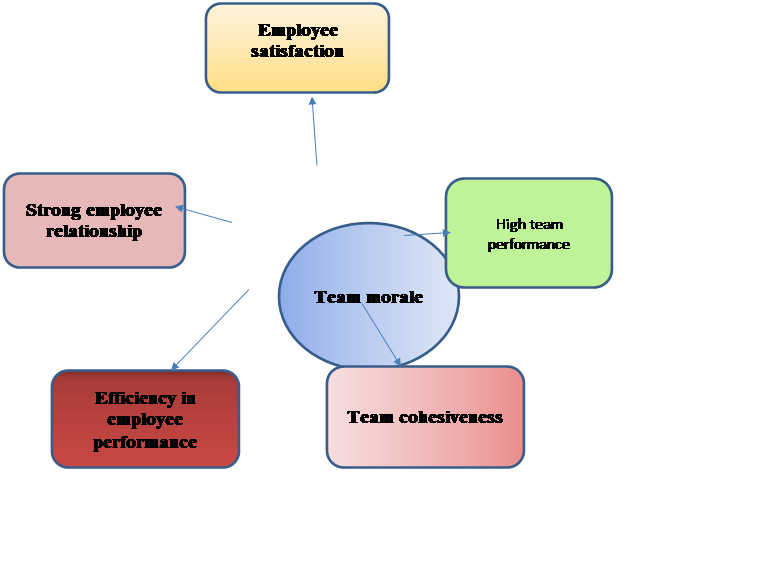
Figure 3.1 Conceptual framework
(Source: Created by learner)
3.3 Ways for creating team morale in a project team
Team morale is very vital for improving the performance level of a project team. There are several ways in which project team managers of the construction industry in India can create team morale. The ways that can be mentioned are:
● Assurance of work and health safety
● Creation of an effective system of communication
● Providing feedback to workers for good performances
● Providing proper training to the workers
In construction projects, there is a high chance of occurring accidents during the constr6 works and that can be dangerous for workers' lives. The assurance of health and work safety provided by the project management team can be helpful for creating team morale by increasing the morale level of the workers. As stated Soni, (2020), the building of a system of effective communication can be useful for making aware the team members of a project team about all taken decisions related to the project work in this way the workers can be capable of understanding the relevance of a new decision and this can increase their morale.
On the other hand, the providence of feedback to the employees for their good performances can be effective in making them interested to perform their job roles with more efficiency and that can help in building team morale. Without proper training, the workers of a project team cannot be able to perform their job roles with satisfaction and this can create issues in creating employee morale. The providence or arrangement of proper training can reach the satisfaction level of the employees while performing their job roles. In this way, team morale can be developed by increasing the employee morale level.
3.4 Effectiveness of team morale on employee performance
The creation or building of team morale helps in increasing the efficiency of the performances of the employees involved in a project team. The efficiency of the employee performances can be developed by team morale from various aspects. The employees can be capable of achieving efficiency in their performance level and can also improve the performance level of the whole construction industry. The aspects in which the employees can be capable of achieving performance efficiency are:
● Building a strong relationship between the workers
● Understanding the steps taken by the project management team
● Understanding the goals and objectives of a project team
The building of employee morale helps in creating a strong relationship among the workers and that can be helpful for understanding each other's problems and helping each other in performing job roles. As recommended by Baptiste, (2019), the help from co-workers can be helpful for the employees to develop their performance level and efficiency level of the performance of the employees involved in a project team related to the construction sector of India. It can be stated that team morale or worker morale helps in building team cohesiveness in a project team. [Refer To Appendix 3]
The understanding of the steps and decisions taken by the project management team can be possible by the building of employee morale in a project team related to the construction industry of India. The employees can be capable to understand the relevancy of the objectives and goals established by project team managers by formulating the employee morale (Rizky&Ardian, 2019). This understanding helps in understanding by the workers in which way they can proceed so that the project objectives or goals can be built. In this way, the employees can be capable of improving their efficiency level while performing their job roles. Proceeding in work by considering the objectives of the project team can be effective by improving the efficiency level.
3.5 Effectiveness of team morale in managing project performances
The building or creation of team morale can be helpful or useful for a project team to create team cohesiveness in an effective way. Building team cohesiveness can be useful for creating a healthy relationship between the employees involved in project teamwork. Team cohesiveness is very effective in creating understanding between the workers and this can affect the performance efficiency of the employees by getting or obtaining help from the
Co-workers engaged in the project team.
The efficiency in the performance level of every employee can be helpful for creating a chance for developing the whole performance level of the project team. The improvement in the efficiency level of the employees involved in a project team can be effective in improving the productivity level of the team (Zhang et al. 2018). Most importantly the building of team morale helps in understanding the requirements of the project team and by understanding this the workers can proceed in the correct way so that the aim or goal of the project team can be met successfully.
The creation of team morale helps in maintaining transparency among the management team and the workers which is helpful in making aware the employees about every decision taken by the management team. The maintenance of transparency between the employees and management team is helpful for gaining the trust of the employees and that can reflect on the performance level and can affect the performance level of a project team. Team morale helps in managing the performance of every worker involved in the team by providing them continuous feedback so that they can be able to find out the possible changes in their performances so that the performance of the project team can be improved (Caniëlset al. 2018). The happier employees can be able to create a healthy working environment and it can be used for avoiding or eliminating employee retention in a project team.
3.6 Challenges in building team morale
There are several factors that are effective in creating challenges or issues in the process of building team morale in a project team. The challenges that can be most importantly mentioned are:
● Stressful team culture
● Unstable leadership
● Lack of communication
● Trust issues
● Lack of assurance for providing work and health safety
The existence of a stressful team culture can create issues in creating happiness for the workers while performing their job roles. As suggested by Ciric et al. (20190, the frequent changes in the culture of a team or in the management team can affect the happiness or satisfaction level of the employees. This creates a challenge for creating team morals in the project team. Unstable leadership in the project team is effective in making chaos in the management system of any team. The employees cannot be directed to the correct path for achieving project objectives. The existence of unstable leadership is effective for reducing the team morale level in a project team.
The lack of communication can create insecurities among the employees of the project team. They may feel that they are neglected by the management team. This can create unhappiness and dissatisfaction among the workers and this can directly affect the level of team morale. The lack of effective communication can cause misunderstanding among the workers and the increasing misunderstanding level creates trust issues among the workers engaged in a project team and this affects the morale level of a project team and its performance level (Khan et al. 2019). It is very important to provide security to the workers of construction projects regarding their safety and health. The lack of assurance of health safety and workplace safety to the workers of a team can create barriers in building team morale.
3.7 Implementation of the vital factors for mitigating challenges
There are several important factors that can be implemented for the mitigation of the challenges regarding the building of employee morale in a project team. The factors or steps that can be pointed out as the required steps for eliminating more creation challenges are:
● Avoiding micromanagement
● Provide importance to a peer-to-peer relationship
● Establishment of clear goals
● Improvement in the balance of work-life
Avoiding micromanagement can be an essential step for mitigating the challenges present in the process of building Employee morale. In micromanagement work, the employees do not have the chance for focusing on the broader goal of the project team. The efficiency of the workers in performing their job roles (Yu et al. 2019). The avoidance of micromanagement helps in engaging the team members by making them focused on the project goal and this can help in building employee morale.
The maintenance of peer-to-peer relationships can help in gaining the trust of the employees by engaging them in the decision-making process and this is helpful for eliminating the challenges regarding the creation of team morale. On the other hand, the establishment of clear goals can create a better understanding between the management team and employees and for that, the employees may feel satisfied and as a result that the issues in the building of team morale can be mitigated. The improvement in the balance of work-life can be effective for fulfilling the personal and professional demands of the employees at the same time. This can create the opportunity for avoiding challenges in creating team morale in a project team.
3.8 Theoretical perspectives
The application of relevant theories can be helpful for a project team to improve its performance level by creating a chance for forming team morale in an effective manner. One of the effective theories that can be mentioned is the equity theory. This theory focuses on the determination for finding out the similar distribution of resources or the fair treatment for every employee involved in a project team. The effectiveness of the application of this theory can be measured by measuring the facilities that the employees are getting from the management team (Megeirhi et al. 2020). This theory focuses on the similar treatment of every worker involved in a project team. The equal treatment of workers can create satisfaction or happiness among the
employees and that can help in creating employee morale.
Another theory that can be mentioned is the theory of need fulfilment. The theory of need fulfilment focuses on the meeting of the requirements of the workers who are engaged in the project team of the construction industry of India. This theory is entirely applicable for meeting the needs of the workers in an efficient way (Tóth-Király et al. 2020). The employees can feel secure and satisfied when their needs are fulfilled by the management team. As an impact of that, the employees feel happy by engaging themselves in their works and that can create employee morale or team morale.
3.9 Literature gap
As stated Soni, (2020), the building of a system of effective communication can be useful for making aware the team members of a project team about all taken decisions related to the project work in this way the workers can be capable of understanding the relevance of a new decision and this can increase their morale. On the other hand, according to Ciric et al. (20190, the frequent changes in the culture of a team or in the management team can affect the happiness or satisfaction level of the employees. Hence, as stated by Baptiste, (2019), the help from co-workers can be helpful for the employees to develop their performance level and efficiency level of the performance of the employees involved in a project team.
3.10 Summary
It can be stated that employee morale or team morale plays a significant role in the success rate of project work. The development of employee morale helps in increasing the efficiency of the performances of the workers involved in a project team. The development in the efficiency level of employees can be helpful for creating a chance for improving the productivity level. The application of the equity theory and the theory of need fulfilment can be useful for a project team to reach the satisfaction level of the employees that is effective in creating team morale. Team cohesiveness can be achieved by building team morale in a project team.
Chapter 4: Research goals and their measurement
4.1 Introduction
In the 4th chapter of this analysis, the factors affecting the movement of the fast-paced sector are going to be analysed. The possible outcomes are evaluated in this chapter that helped in making sustainable improvements to the financial performances of the several operational sectors. With the help of using various independent variables the whole research work has been structured.
4.2 Aim
The main aim of the present study is to boost the engagement of the employee of the organization. In this regard, several initiatives have been identified in this analysis to uplift the morale of the workers involved within the construction company.
4.3 Research question
● Are the variables affect the employees’ morality who are working within the construction industry?
● What is the most effective technique that helped in improving morality in the context of the Indian employees?
● What are the best possible recommendations that facilitate implementing massive impact in improving the morality of construction employees?
4.4 Objectives
● To ascertain the important variables that make a massive impact in improving the morality of the employees
● To evaluate the best morality building technique as it provides sustainability in incrementing the morality of the Indian employees
● To determine the effective recommendations that are useful in making adequate improvement into the morality and operational performances of the employees
4.5 Variables
There are several variables that exist that affect the morality of the employees working within the construction industry. Employee satisfaction is one of the important variables that affect the morality of the employees in the construction industry. As stated by Abdullahi et al. (2021), making string employee relationships among the various department from top to bottom level management are helped in making some strategical growth into the business. High team performance has facilitated in uplifting the financial operational activities of the business for a stipulated period of time. An increase in the operational activities is one of the important factors that helped in improving sustainable activities and team
morality of employees working within the construction industry.
4.6 Hypothesis of one variable
h3: Increase in the level of efficiency is directly involved with fluctuating the morality of the employees. Whenever the employees are found themselves less expertise in their field, they are taking more pressure in performing the roles of the jobs. In contrast, it has been observed that the employees who are indulged with solving the critical problems in their jobs with so much expertise, the morality of those employees will be increased.
4.7 Hypothesis with two variables
h3: Strong employee relationship between two or more employees has helped in making sustainable development in increasing operational performances of the employees. Improvement in the operational performances makes them more satisfied and facilitates incrementing morality within the organization.
H2: High team performance facilitated in improving critical solving abilities of the employees and at the same time it increases the satisfaction level of the employees. As much the employees feel satisfied with the operational activities incurred and it makes a positive impact in uplifting the morality of the employees.
4.8 A matter of semantics
H0: Strong employee relationship is not helped in high team performances as the team morality of the employees working construction companies are not affected by the changes in the performance level of the employees. High team performance is a matter of reflecting the operational efficiency of the employees into the organization. It does not make any sense into the matter that the employees’ morality has been improved. On many occasions, it has been observed that due to the enormous pressure the operational efficiency of
the employees has been increased. In further, it has been visualized that strong employee relation is not considered the ultimate way that can be able to improve the morality of the employees. Consideration of the sustainable operational techniques and development of the financial services are said to be the main reason behind the improvement into the employment relationship and it is not a justified solution to improve team morality.
4.9 Evaluative discussion with the help of variables
Remote work imbalances and work time blends are considered as the two most effective reasons in the life of construction workers that make sustainable changes and decline the team morale. The fluctuation in the workloads is the other effective variable that makes it sustainable into the team's morality. As believed by Ahakwa et al. (2021), changes in the leadership patterns and style of giving direction to complete the job roles make a sustainable impact on the business activities. Changes in the nature of work and professional development program incurred for the employees have made a clear impact on the fundamental analysis of the team morality development. The improvement into the workplace culture and adequate
authorization into the operational policies have made it sustainable in making promotional development of the business activities. Distributed team settings make a positive impact in enhancing team morality in the construction industry.
4.10 Discussion on the subject variables
In the case of discussing the subject matters that are related to the team morality, it is necessary to evaluate the financial operational activities that are undertaken by the organization to improve the operational activities. As narrated by Smith et al. (2021), development into the workplace culture is directly interconnected with the high team performances of the business. Improvement into the operational activities and making sustainable development into the business are said to be one of the main reasons for interconnecting the promotional activities of the business. Changes in the operational strategies helped in improving the workplace culture in the organization. The interconnection between the strong employee relationships makes a crucial impact in developing the promotional activities and making a modification of the team morality within the organization. Thus, it has been observed that improvement into the employment relationship has to facilitate incrementing the team morality of an organization.
4.11 No relationship between the DV and IV
The two important variables in the present analysis are the efficiency of employees and employee satisfaction in the construction industry. These are said to be two independent variables that are directly connected with dependent variables team morality. As mentioned by Geue (2018), the positive impact of certain factors on the team variability has made a massive impact on the operational activities of the business. An increase in the efficiency level of the particular employees does not make any kind of impact in delivering the operational promotional activities of the business activities. The term team morality improvement is connected with the improvement of each and every employee observed with the business. In contrast, the individual efficiency
increment does not make any kind of impact in developing team morality in the construction industry. Improvement into the employment relationship between two or more two employees makes sustainable growth into the operational growth of the organization.
4.12 Implementation of the automotive tools in improving team morality
The usage of automotive tools by the lower-level construction employees has helped in implementing the mental, physical, and moral well-being of the employees. The systematic operational activities and promotional growth analysis within a business will be improved to promote operational development into the mind-set of the employees. As opined by Govender and Bussin (2020), changes in the business strategies and development of the preliminary activities of the business should need to be implemented for the purpose of improving team morality within the business. The adequate training program has helped in improving the efficiency of the employees and at the same time, it facilitates in giving the proper knowledge about the usage of the machines and materials
within the business activities.
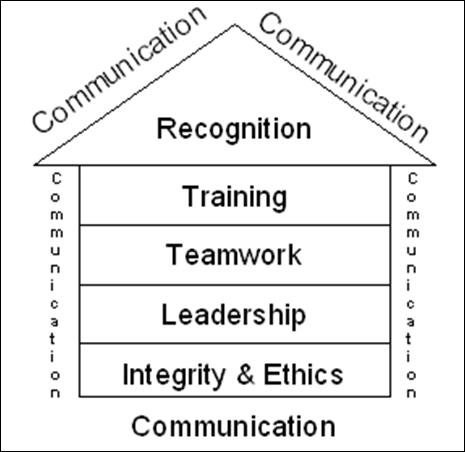
Figure 4.1: Elements of morality improvement
(Source: Shrm.org, 2022)
One of the main perspectives of using automotive tools in the construction industry is to increase the level of employee engagement and increase job satisfaction level in the business. The overall employee motivation can be improved with the help of giving adequate training in employee development as it helps in giving a positive impact in making a positive impact into establishing the team morality within the construction companies.
4.13 Estimation of the levels of making measurement
The team morality in the construction industries can be improved with the help of improving the level of communication between the various departments within the organization. The main perspective of using the communication channels in the business is that it helps in giving proper concern about the problems and gaps in the business. The best possible solutions should need to be adopted to make sustainable operational activities that helped in making positive growth into the business. As argued by Jiaet al. (2019), the leadership procedures should need to be transparent as they make a sustainable impact in improving the mortality of the employees within the operational activities. Adequate employee feedback and
making sustainable growth into the employee perspective helped in making economic growth into the direct business activities. [Refer to Appendix 4]
Identification of the problems that the employees are facing is said to be the most effective problem that is related to the risk-taking abilities within the organization. Making specific changes such as changes in the job-specific approach and modification into the technical setup have helped in making a direct impact on the promotional activities of the organization. As opined by Hultman (2020), the application of the reward system will be helpful in making effective increments into the team morality of the employees. The establishment of the cordial work environment and effective evaluation of the managerial support is said to be the main feature that includes decisions making activities of the business. Receiving sufficient feedback from the customers
and make concentrating focus on personal recognition are said to be the permanent solution in making improvements in team morale.
4.14 Nominal data validation into the construction business
The main perspective of using nominal data analysis within a research work is to recognize the categories and variables used within the data analysis. The areas that helped in measuring the data into the construction business are frequency analysis, proportion evaluation, percentage analysis, and mean median evaluation in accordance with the present research analysis. As stated by Potoski & Callery (2018), for the purpose of evaluating team morality for a specific period of time, the usage of the nominal data has been applied to the ratio analysis. In the context of improving team morality, the main important aspect of nominal data is to evaluate the employee efficiency level, employee satisfaction level, and the exploiting the working style of the
employees under different circumstances. The self-review incurred by the employees need to be properly measured to determine the operational activities and meet the managerial requirements within the business. Based on the above discussion, it can be clearly visualized that there is a sustainable impact exists of nominal data over the employee morale of causation industries.
4.15 Ordinal data presentation of the construction business
The presentation of the ordinal data is said to be one of the important operational aspects to evaluate the main areas of the discussion into the factors affecting the development of the employees of the construction industry. As mentioned by Barajas (2021), the examples of the various kinds of ordinal data are presented with the help of questionnaires in which the interrelation between the dependent and independent variables has been discussed in the contextual background evaluation of the research topic. The ordinal data have been prepared based on the terms such as high team performances, employee satisfaction, strong employee relationship, and employee collaborations. The questions are prepared in such a manner that is there any connection that has been
observed with the variables that are directly related to the employees’ team morality.
4.16 Internal and ratio data into the construction
The usage of the interval scale in the construction industry is to be prepared based on the numeral scale and Likert scale analysis of the research context. As criticized by Price &Toye (2017), the significance of using interval ratio analysis is to highlight the internal relationship among the different factors used within the construction industry.
In this case, the factors that are used in determining the interval ratio analysis are the employee holding rates into the business, the purpose of using employee holding rate is to help in evaluating the operational activities and financial performance development within the business.
4.17 Types of data
Primary quantitative data have been analysed in this section for the purpose of discussing the role of the various construction business factors in leveraging employee morality. One of the major aspects of using employee morality is to make a sustainable evaluation regarding the interconnection between high employee performances and team morality. Expansion of the financial growth within a business makes a major impact in highlighting the important financial aspects within the business. Changes in the operational structure and making modifications to the business activities have made a decent impact on the data collection procedure of the business activities.
4.18 The role of money as a variable
The substantial impact of money has been observed in incrementing the overall team morality of a conscuti0on company. An increase in the salary structure of the employees makes a massive impact in maintaining sustainable performances within the major operational activities. In contrast, making a reduction in team morality and decrease into the financial service make a negative impact on the development of the financial policies into the business. Classification of the business and segregating the whole operational services of the business in various departments can make an effective impact in promoting the morality of the team. In the same manner, the promotional activities and making sustainable implementation helped in improving the morality level as
well.
4.19 Estimation of the three objectives with the four variables into the analysis
The first objective of the construction industry will be making a strong relationship with the employees of the organization as it helps in improving the bonding of the various departments within the business. In order to make strong employee relationships, the organization should need to improve the steps of the business that need to be undertaken into the construction industry. Making sustainable modifications into the steps of the project management team will make a massive impact in establishing team morality in the organization (Apty.org, 2022). In this regard, the third important objective will be considered with making changes regarding selecting the goals and objectives of the business. These three objectives have to be followed in the construction
industry for the purpose of improving the team morale among the construction employees’.
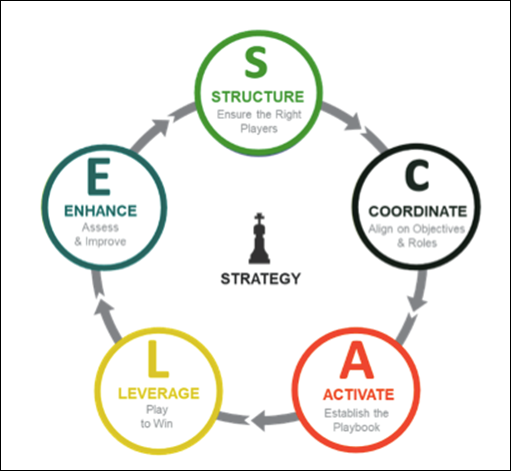
Figure 4.2: Morality improvement strategy of construction industry
(Source: Apty.org, 2022)
4.20 Summarization of the research goals and variables interconnected during the analysis
Based on the analysis of the present chapter, it has been observed that sustainable improvement into the team morality is required for the purpose of making sustainable growth into the organization. Application of the automotive tools is observed as essential to increase the operational efficiency of the employees working in the construction industry. In the conclusion part of this section, the future business objectives are explained for the construction industry as it helped in making sustainable development in establishing team morale among the construction workers.
Chapter 5: The Methodology chapter; analysis, results and findings
5.1 Introduction
This chapter will provide details about the data collection methods, reliability and validity management strategy, and analysis of the collected data. The data collection approach and ranking studies will be key aspects of analysis in this chapter. Different analytical tools used for the analysis of the collected data will be described in this chapter properly.
5.2 Approaches to collecting data
A primary survey is the selected data collection approach in this study. Primary sources of data are authentic sources that help maintain a solid basis in research (Pandey & Pandey, 2021). Therefore, the primary survey strategy has been chosen here for maintaining this research regarding the team morale and the improvement of project management strategy in different organisations.
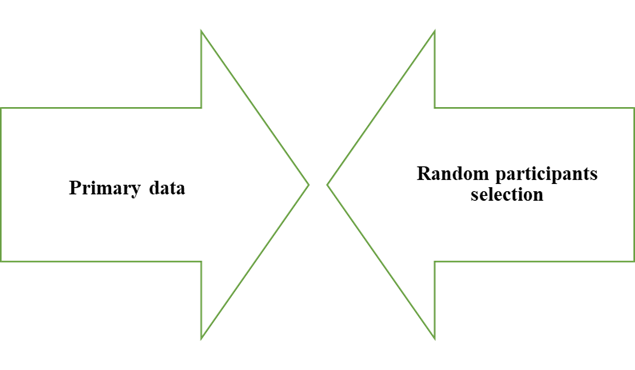
Figure 5.1: Data collection
(Source: Learner)
Random selection of the individual is performed for this data collection and survey strategy management. However, these data are collected after selecting those participants who have enough experience in teamwork as well as have the knowledge about the team morale improvement strategy. Secondary data are important in terms of supporting the primary result; however, they are not selected to improve the authenticity of results, as primary data are highly authentic.
5.3 Data measuring and collection
Data collection is done by selecting 60 participants who have teamwork experience and knowledge about the morale building that can help improve productivity. A total of 15 questions have been asked in the survey to those 60 respondents regarding their experience with teamwork, team morale and productivity development. The samples of those respondents are total of 100; however, these are reduced to 60 due to high consumption time and budget in this research. The survey can be termed as inflexible and a rigid data collection strategy in the qualitative survey; however, it is supportive of quantitative close-ended questionnaires (Braun et al. 2021). Data are measured based on the response of those 60 respondents as they provide authentic answers regarding team morale and project performances. Data are collected via an online survey link using the Google Form to minimise the close contact, especially during this pandemic situation.
5.4 Issues mostly relevant to just questionnaires
The demographic questions are good enough in determining the experiences of response nets in work. The question regarding the impact of the positive morale of employees in any organisation is a supportive one. However, the reasons for such lower morale are not clear enough by doing only just questionnaires. Secondary data are effective enough for answering this issue regarding the reasons for such lower morale as this survey is just options based. An in-depth analysis is not an advantage for just a survey questionnaire strategy to collect data in any research. Dishonest answers can be another important drawback of just doing a questionnaire in research as they create issues in conveying the feelings of any individual (Carpenter et al. 2019). Lack of personalisation strategy and the presence of erroneous and unconscientiously responses in survey questionnaires are the drawbacks of doing only questionnaires in research.
5.5 Ranking studies
|
Rank |
Author |
Description |
|
1 |
Rasool et al. (2020) |
Workplace violence, stress and other conflicting situations that can reduce the morale and productivity of staff in an organisation are the main aspects of this study. |
|
2 |
Zhang et al. (2018) |
The use of technology such as BIM in improving the staff relationship and morale in project management is the main objective of this article. |
|
3 |
Lai et al. (2018) |
Details about leadership during any teamwork are mentioned in this article. The importance of leadership style in any organisation that can improve the productivity and morale of employees is mentioned thoroughly in this article. |
Table 4.1: Ranking study
(Source: Learner)
5.6 Other analytical tools
Comparative or any alternative designs that are environmentally friendly strategy such as online Google survey is used in this study. The bar chart is the tool that has helped in determining the actual interpretation of the data to collect accurate results. Decision trees are used to make decisions based on the outcome of the data analysis. Cost-benefit analytical techniques that have helped collect survey data at a comparatively low cost, such as online surveys, are important in this research.
5.7 Incorporating reliability and validity
Reliability and validity of data are important aspect to maintain authenticity throughout in a research. According to Moon (2019), triangulation of data is an essential strategy that helps maintain the reliability and validity of data. Selection of proper tools, research design, and proper data clearing helps maintain reliability by eliminating erroneous data. All the collected data are authentic due to primary data that further increases reliability. However, only experienced respondents have been chosen for this survey to increase their responses' validity. Improvement of data measurement technique, randomisation strategy development and controlling of variables are essential steps that have helped in increasing data validity.
5.8 Analysis, results and findings
Analysis from the collected data via survey has indicated that morale of employee increases productivity positively by reducing employee turnover and stress at the workplace. A large number of respondents have supported that morale improvement is beneficial for the development of motivation and engagement with organisations. Different respondents have answered that communication, feedback management and training can improve the morale and skill of other staff.
Chapter 6: Laboratory experiments
6.1 Introduction
This chapter will provide details about laboratory experiments that are the in-depth analysis of the research topic. Details of test methodology, source of materials that support the laboratory analysis and recording procedure will be discussed here. The COSHH risk assessment will be another important topic that will be discussed here.
6.2 Test methodology
The test methodology is a process of identification of issues regarding methodology by analysing variables in research. Variables that are used in this study are team morale and product performance. The data analysis limit has been set here is up to 60 as a total of 60 participants are selected for the survey. Acceptable uncertainties are small errors in responses from the respondent while providing accurate answers. Safety issues that are present in primary research are eliminated by using a secured environment for the survey. All ethical codes are selected for the safety of data and respondents' safety. Data protection act 2018 has been implemented for the safety of data and respondent's information in this research (Legislation.gov.uk, 2022). Data that are stored on digital platforms are well protected by passwords. Ethical consideration indicates that data are not used for any commercial purpose, and they will be deleted after five years of
competition in this research.
6.3 Sourcing test materials
Test materials include the details of the tool along with selected research tools that are used in these articles. Therefore, potential article selection for support of this primary research data is necessary to maintain accuracy in the result. Effective HR practices are important in improving employees' morale and a self-evaluation environment (Dash & Mohanty, 2019). Therefore, the test materials used here are completely based on employee morale and their important role in improving the performance of a project. The selection of effective sources that provide complete information regarding the employee's morale for improvement of project performances is selected here. Those sources are not more than five years old; however, data older than five years are completely excluded as the source material for the short of the respondents' answers.
6.4 Reliability and validity of findings
A reliability test of the data has been performed in this study to test the reliability and validity. Cleaning data includes eliminating discontinuous or erroneous data from the dataset to maintain accuracy. Validity and reliability are two essential aspects of research that help maintain the research's quality (Hayashi et al. 2019). Effective designing of the tools that can affect the reliability of respondents' collected preliminary information are planned before starting the analysis. Graphical representation of the data helps in analysing the information effectively, which is supportive enough in terms of checking the validity of data. A record is kept of the raw data to check whether the data that are analysed are completely error free or not.
6.5 Sample size
The sample size for this primary research is 100 initially higher, and this value is reduced up to 60 due to completion within the deadline and at a lower cost. This sample size is good enough in terms of the primary survey; however, budget and time management are two critical factors that need to be performed for any survey. Two factors influence the extent of sampling the selection of sample size and the technique of the sampling (Etikan&Babtope, 2019). Therefore, reduction of participants from the actual size of the sample is necessary for error-free successful completion of this study.
6.6 Laboratory recording procedures
Laboratory recording is an important procedure that helps in recording the practical tasks of research. The logbook is selected to record this project's daily tasks, including selecting topics for data collection and analysis. Logbooks help in the identification of the historical data that are presented in research in previous stages.
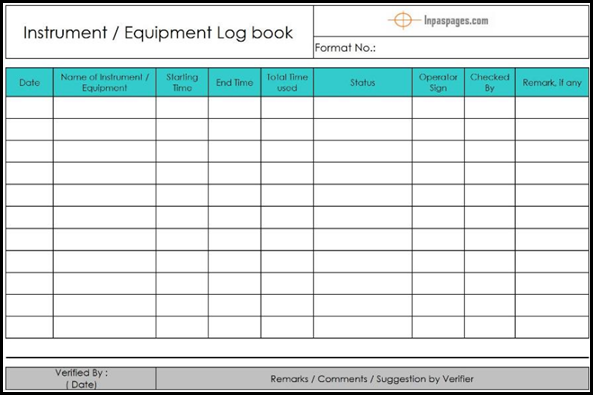
Figure 6.1: Logbook
(Source: Inpaspages, 2022)
Updated information along with descriptions is noted in this logbook to use it for future research. Logbook contains graphs, objectives, details of procedure of data analysis, and observations.
6.7 Dissertation/project writing
Project writing is another important aspect of research that indicates the information about the project. Complete details regarding the team morale and performance development of employees are mentioned in this study. Measuring employees' accurate morale is the barrier to which proper documentation is required (Patilet al. 2018). Details about the methodological tools and super of literature that only contains the details of morale and performance development are selected to maintain authenticity. This effective writing has enabled the option of justification of the topic along with allowing us to do experiments about the topic. Since it is primary research, the future perspective of this research is good enough as it can be used as a secondary data source.
6.8 Health and safety in the laboratory; COSHH and risk assessments
The COSHH matrix is performed to determine the issue or risks along with possible safety management strategies in organisations.
|
Hazard |
Persons at risk |
Level of risks |
Controlling strategy |
Residual risks |
|
Budget management |
Project manager |
High |
Effective budget planning has been made to mitigate risk |
High |
|
Respondent management |
Project manager and participants |
High |
Safety management for the information |
Medium |
|
Authenticity in result |
Learners |
High |
Better planning for data collection and analytical tool selection |
Low |
Table 6.1: COSHH table
(Source: Learner)
6.9 Role of the supervisor
The supervisor in this research project has played a vital role in tracking and planning every stage and providing inception for completion. According to Chen & Lin (2018), the supervisor of a project has an important role in maintaining relationships with managers. Therefore, the supervisor supervises the task of every stage along with the helping council and directs the pathway. These functions are beneficial enough in this project to determine the morale of employees and their role in productivity.
6.10 Possible research topics for technical dissertations or projects, construction and civil engineering
The possible research topic that can be derived from this current topic is the strategy of employee morale development, the issue of morale and the reason for employee morale development for productivity improvement. Morale is dependent on the satisfaction of the job and the well-being management of employees (Mallik et al. 2019). Technical projects can be constructed using this topic by comparing it with other morale and motivation related topics.
6.11 Examples of research proposals
Research proposals that are associated with the analysis of the morale development for employees in an organisation to improve productivity are selected to take information regarding the topic. Further, proposals that are related to the possible budget and time range for completion of this topic are selected to make the research effective.
6.12 Research objectives and sample findings by the author
Possible research objectives that can further be initiated here are:
RO 1: To analyse the reasons for lower morale of employees in an organisation that can influence the performance development
RO 2: To recommend strategies for improvement of employee morale for performance development of employees
Others have used this paper as a sample mainly as a secondary source in other research. Samples of articles of other authors include details of the morale and its importance in productivity improvement in an organisation. Further, details of such morale development strategies for improving competitiveness of a company is selected here to gather more in-depth knowledge.
Chapter 7: Quantitative data analysis
7.1 Introduction
Quantitative data collection is one of the important processes for collecting numerical data. In order to deliver a better analysis of data from a critical angle, the quantitative analysis process is one of the suitable ways of interpretation. Gathering and measuring information on the variables of interest can be done with the help of quantitative data analysis. It enables the discovery of trends and changes of opinions around different issues. It can help to facilitate decision-making processes and deliver issue-solving dynamics within research. The following part have depicted on the process of quantitative data collection as well as steps within the data analysis.
7.2 The process of quantitative data collection
Qualitative data is one of the biggest sources of numeric data that can be used within a study to ensure that research objectives are met through evidence-based analysis. There are several methods and processes of quantitative data collection. Johnston (2017) mentioned that primary quantitative data could be collected with the help of close-ended surveys. In this study, primary quantitative research has been used in terms of the collection of primary data that can be analysed in a statistical manner.
The process that has been applied in this research is quite diverse and rigorous. A survey questionnaire based on 16 questions is developed through Google Form. Moser& Korstjens (2017) mentioned that as a survey questionnaire is an instrument in research, delivering a safe and easily accessible instrument becomes significant in a study. Similarly, Google form has helped to build the quantitative instrument in this study. The questions are divided into two categories such as demographics and variables. In the demographic section, questions about household income, age, gender and marital status are asked. Meyer & Nelson (2020) argued that the demographics of the participants allow for background information. The specific purpose of the demographic section is to describe the
participants and whether they are representative of morality in workplace issues. Thus, this section has described the research participant’s validity in responding to the questions. [Refer to Appendix 5]
There are various sections in the instrument where independent and dependent variables are addressed with specific questions. Here, in this study, 12 questions are asked to the participants. The process has been completed online, and all the participants have been asked to respond to the questionnaire via social media platforms. Androutsopoulos (2017) commented that online surveys are one of the most cost-effective as well as fast processes for collecting primary data. The performance of online surveys is much more widespread as compared to other types of data collection methods. However, Bilsborrow (2016) argued that online surveys could be difficult for unaware technology participants. In order to solve these issues, much focus on sampling has been given to collect
representative sample sizes.
The participants were asked to complete the survey questions in order to collect 60 sample size data. Data cleaning and processing have been done in order to ensure that there are no anomalies or missing data in the data set. The data sets are cleaned and processed within an MS excel sheet. Aguinis et al. (2021) mentioned that proper coding must be done in order to analyse the data in SPSS. Thus, quantitative coding on the raw data has been done through data processing methods. For instance, data coding techniques like ‘1’ for ‘Strongly Agree’, ‘2’ for ‘Agree’, ‘3’ for ‘Neutral’, ‘4’ for ‘Disagree’, ‘5’for ‘Strongly agree’ have been applied in this study. Thus, it can be seen that data processing and data cleaning have been applied to this data set. Hence, the data collection process was quite rigorous and time-consuming. However, with the help of
tools like Google Form and MS Excel, the collection of quantitative data became smooth and productive in this study. Thus, it can be said that data collection through primary survey questionnaire has increased collection speed within a limited resources.
7.3 steps in the analytical process
Primary data analysis is the original process of data analysis. The collection of primary data can be analysed through different techniques. However, in this study, a visualized and graphical analysis process has been adopted. Ong & Puteh (2017) mentioned that the SPSS tool could be an excellent data analysis tool for survey data. Hence, SPSS data analysis software has been taken in this research. Zou et al. (2020) argued that the choice of data collection depends on the type of data. As a primary close-ended questionnaire survey only collects primary data, therefore SPSS tool selection is viable in this study.
The analysis procedure involves the identification of variables within the research. Alili & Krstev (2019) opined that independent and dependent variables must be identified in order to deliver a proper relationship analysis. In the first hypothesis, ‘Morality of employees’ has been identified as the Dependent Variable (DV) and 'Level of Employee Efficiency' is the independent variable (IV). Similarly, in a hypothesis with two variables, 'Strong employee relationship’ is the IV and 'Operational performance', 'Sustainable development is the DV. Similarly, 'High team performance' and 'Critical solving skills' are the independent variables, and Employee satisfaction is the DV in the last hypothesis.
The process is to test the relation between two or more variables with the help of different data analysis dynamics. Sommet & Morselli (2017) mentioned that Correlation tests, Descriptive analysis, and T-tests are some of the critical dynamics of quantitative analysis that can help in determining interdependence between variables. Apart from that, there has been the Mann-Whitney test, Wilcoxon's t-test and parametric tests, which have been performed with the data set. However, Differences in means, correlation and Chi-square are three of the main analyses that were used in this study.
Hence, it can be said that quantitative data analysis has provided this study with objectivity. As it relies significantly on the variables and numbers, accurate interpretation through empirical boundaries has been demonstrated.
Chapter 8: Quantitative data analysis; descriptive statistics
8.1 Introduction
Descriptive statistics analysis is one of the critical dynamics of performing quantitative analysis on survey data. In this section, descriptive statistical analysis is performed with the help of the SPSS data analysis tool. The descriptive analysis has supported the needs and requirements of this quantitative analysis with the help of different dynamics.
8.2 Examples of the use of descriptive statistical tools
8.2.1 Calculation of descriptive statistics
Calculation of descriptive statistics without a spreadsheet can be done through Mean. Mode and Median calculators. There are also interquartile range calculators and Std. Calculator that can be used in order to define descriptive statistics without a spreadsheet. However, all of these calculators can be found within the SPSS tool. Missing data can be defined as the data that are not recorded within a data set. Liu (2016) mentioned that missing data is the result of failed responses. Treated data is the rectified data set that previously had anomalies and missing values. For instance, a missing data within a 60-strength sample size can look like 56-4, where 4 is the missing value. However, after treating this data through a processing method, this should look like 60-0.
8.2.2 with a spreadsheet
Calculation of descriptive statistics with a spreadsheet is a significantly time-consuming process. With the help of the data analysis tab in MS excel, descriptive statistics can be projected on a data set. Selection of input range, output range and summary statistics would generate descriptive statistics value in the spreadsheet.
8.3 Ancillary variables
Here, the primary variables are 'Level of Employee Efficiency', 'Morality of employees', 'Strong employee relationship’ and many more. Milovanović, M., & Perišić (2020) opined that a study should have multiple variables, and some of them will be used in the data analysis process. Apart from the used variables, there are certain variables that have been used in terms of designing the experiment. However, they are not included in the primary data analysis process. Some of the ancillary variables that are considered within this study are employee motivation, feedback and leadership communication, and quality and safety factors. These are included within the data analysis process. However, they were used in the survey questionnaire design. It should be mentioned that ancillary variables could improve analysis as well as interpretation
through the effective assessment of the randomization process.
8.4 Illustration of relevant descriptive statistics in charts
|
“Descriptive Statistics |
|||||
|
|
N |
Minimum |
Maximum |
Mean |
Std. Deviation |
|
Gender |
60 |
1 |
3 |
1.47 |
.566 |
|
Age |
60 |
1 |
5 |
2.13 |
1.321 |
|
marital_status |
60 |
1 |
4 |
1.97 |
1.119 |
|
Income |
60 |
1 |
5 |
2.63 |
1.314 |
|
Recognition |
60 |
1 |
2 |
1.23 |
.427 |
|
impact_of_positive_employee_morale |
60 |
1 |
4 |
2.20 |
1.147 |
|
low_employee_morale |
60 |
1 |
4 |
2.17 |
.977 |
|
boosting_employee_morale |
60 |
1 |
4 |
2.67 |
1.052 |
|
Reaching_Certain_Level |
60 |
1 |
5 |
3.23 |
1.240 |
|
Sucess_And_Morale |
60 |
1 |
5 |
2.73 |
1.425 |
|
Morale_and-Performance |
60 |
1 |
5 |
2.80 |
1.286 |
|
Techniques_Morale |
60 |
1 |
4 |
2.30 |
1.225 |
|
Recognise_employees’_contribution |
60 |
1 |
4 |
1.87 |
.892 |
|
Morale_project_Performance |
60 |
1 |
4 |
1.87 |
.965 |
|
Distributed_team_settings_and_Team_Morality |
60 |
1 |
5 |
2.77 |
1.125 |
|
Valid N (listwise) |
60 |
|
|
|
|
Table 8.1: Descriptive statistics
(Source: SPSS)
The above table has depicted the descriptive statistics dynamics of the primary data. It can be seen that ‘Gender’ has a mean value of 1.47. Thus, it suggests that the majority of the employees belong to the ‘Female category’. At the same time, ‘Age’ has a mean value of 2.13. Therefore, all of the workers are within the age group of ‘31-40’. This also implies that respondents belong to the experienced age category. Henceforth, it is evident that descriptive statistics on the demographic area have revealed that the respondents are relevant to the construction industry, and they have critical experience dynamics to ensure there is no opinion bias.
From the above table, it is evident that descriptive statistics have supported the need for Central tendency requirements and measure of the variability. Liu (2016) mentioned that a measure of variability usually aids in analysing the weather the data is dispersed. The central tendency has been suggested on the average of the data sets through mean and Std. Deviation detection. The statistical output only depicts that the data set is distributed in nature. Std. deviation values around each of the items have demonstrated that the variable is distributed around its means. The more the data set is spread, the larger variance can be observed in relation to the Mean.
8.5 Normal distributions; Z scores
8.5.1 Normal distribution
|
“Tests of Normality |
|||||||
|
|
Sucess_And_Morale |
Kolmogorov-Smirnova |
Shapiro-Wilk |
||||
|
|
Statistic |
df |
Sig. |
Statistic |
df |
Sig. |
|
|
Morale_and-Performance |
Strongly agree |
.218 |
12 |
.120 |
.859 |
12 |
.048 |
|
Agree |
.296 |
22 |
.000 |
.822 |
22 |
.001 |
|
|
Neutral |
.335 |
8 |
.009 |
.804 |
8 |
.032 |
|
|
Disagree |
.202 |
6 |
.200* |
.853 |
6 |
.167 |
|
|
Strongly disagree |
.226 |
12 |
.091 |
.859 |
12 |
.048 |
|
|
*. This is a lower bound of the true significance. |
|||||||
|
a. Lilliefors Significance Correction |
|||||||
Table 8.2: Normality tests”
(Source: SPSS)
The above table depicts the normal distribution of the data. Delacre et al. (2017) mentioned that the Shapiro-Wilkins test is significantly appropriate for a smaller sample size. Here, the sample size is 60; thus, the normal distribution has been identified through Shapiro-Wilkins normality tests. The Sig value determines whether the data is normal or not. Here, sig value>0.05; thus, the data should be considered normal.
8.5.2 The Z score; standard score
Z-score should allow the data to compare different items that are taken within different measurement units. Both Z scores and P-values are associated with the standard normal distribution. The Z-score analyzed has demonstrated that both positive and negative values exist within the data set. Mishra et al. (2019) opined that a positive Z-score means that the raw score should be considered higher than the mean average. For instance, 95% of the Z_Age are within the -2 and +2. Thus it can be said that responses were quite relative to the Mean of the age group.
8.6 A second variable for descriptive analysis; an IV and a DV
A second variable for descriptive analysis can help in relationship development. Cain et al. (2017) mentioned that two variable selection helps in terms of influencing the identification of one variable (IV) to another (DV). For example, Normality tests have only been demonstrated through one variable such as “Employee morale”. However, with the help of another DV such as “Project performance”, it is possible to deliver and influence analysis. Whether project performance gets influenced by employee morale can be identified through consideration of a second variable.
Chapter 9: Qualitative data analysis and inferential statistics
9.1 Introduction
This study has been performed with the help of the survey method. The data has been analysed by the SPSS software, by which complex statistical data has been analysed. The main purpose of this study is to analyse the team morale in the improvement of project performance.
9.2 Probability values and three key tests: chi-square, the difference in means and correlation
The Chi-square test is associated with the statistical tests that measure whether the model can be compared with the observable data. According to Ali & Bhaskar (2016), Chi-Square tests can be used in terms of testing the hypothesis. In such a case, degrees of freedom are analysed to determine whether the null hypothesis can be rejected. Two chosen variables, 'Morality of employees' and 'Employee efficiency', can be compared in terms depicting their interrelationship. Here P-value is a critical element that should be considered against validating data. Normally the p-value should be less than 0.05. Having a statistical significance of < 0.05 indicates the probability of rejecting the null hypothesis.
A correlation test is used in terms of quantifying the associated degree to which two variables are correlated with each other. Correlation statistics only depict the interdependence in DV on IV. Linear relationships between two variables are recognized with the help of correlation statistics. Love et al. (2019) opined that correlation gets measured on a 0 to 1 scale. Here, 0-0.2 suggested a very low correlation between the variables. Similarly, 0.8-1.0 supports the very high correlation between the variables.
Differences in means tests can be evaluated with the help of independent t-tests. The outcome from the t-test should be produced at value. A large t score should depict that groups are different in nature. Small t scores should be delivering that groups are similar. It is need to be mentioned that P value less than 0.05 suggesting that two group means are significantly different. Increase or decrease in the mean difference can be observed with the help of independent t –test.
9.3 The chi-square test
The data has been analysed with the help of the Chi-square test. As suggested by Sommet & Morselli (2017), the chi-square test is the statistical test that also helps to measure the difference between the expected frequencies and observed frequencies of the variables. Additionally, this test has been performed to observe the key results of the data that involve the association between the variables, and the observed and expected outcomes also indicate whether the values are significant or not. On the other hand, as argued by Purwanto, Asbari & Santoso (2021), in this test, the p-value should be needed higher than the significance level; otherwise, the null hypothesis is rejected. Therefore, this
study also discusses that team effectiveness has a powerful impact on improving the team structure, and it also helps to get success in a project.
|
Chi-Square Tests |
|||
|
|
Value |
df |
Asymp. Sig. (2-sided) |
|
Pearson Chi-Square |
53.999a |
16 |
.000 |
|
Likelihood Ratio |
60.124 |
16 |
.000 |
|
Linear-by-Linear Association |
31.149 |
1 |
.000 |
|
N of Valid Cases |
60 |
|
|
|
a. 22 cells (88.0%) have expected count less than 5. The minimum expected count is .40. |
|||
Table 9.1: Chi-Square test
(Source: SPSS)
In the above-mentioned test, the p-value of the chi-square test is about 0.0. As per the base value of 0.05, this obtained value is less than 0.05. Therefore, the alternative hypothesis is accepted, and the null hypothesis is rejected. As per the view of Ong & Puteh (2017), there are various approaches to the organizational structure that involve communication gradients, network analysis, formal structure, and cultural structure. Therefore, this study also provides knowledge about the importance of team structure in achieving success in a project.
9.4 Checking of the non-parametric and parametric nature of the data set
In this study, the independent t-test has been chosen as the parametric test, and the chi-square test has been selected as the non-parametric test. As commented by Lemenkova (2019), the chi-square test is also referred to as the non-parametric statistic. Additionally, parametric tests in SPSS are also referred to as those “that make assumptions about the parameters of the population distribution from which the sample is drawn”. Non-parametric tests also involve non-normal variables and are distribution free. In the above mentioned independent t-test, the sig value was 0.28, which is smaller than 0.5. Therefore, it also suggests that there is a close relationship between the variables. In the above mentioned-chi-square test, the obtained p-value was 0.0, which is less than 0.5. It also indicated that the variables are significant that are chosen for this study.
9.5 Difference in mean tests; the’t-test
|
“Group Statistics |
|||||
|
|
Sucess_And_Morale |
N |
Mean |
Std. Deviation |
Std. Error Mean |
|
Morale_project_Performance |
Strongly agree |
12 |
1.33 |
.492 |
.142 |
|
Agree |
22 |
2.00 |
1.155 |
.246 |
|
|
Independent Samples Test |
||||||||||
|
|
Levene's Test for Equality of Variances |
t-test for Equality of Means |
||||||||
|
F |
Sig. |
t |
df |
Sig. (2-tailed) |
Mean Difference |
Std. Error Difference |
95% Confidence Interval of the Difference |
|||
|
Lower |
Upper |
|||||||||
|
Morale_project_Performance |
Equal variances assumed |
5.304 |
.028 |
-1.898 |
32 |
.067 |
-.667 |
.351 |
-1.382 |
.049 |
|
Equal variances not assumed |
|
|
-2.345 |
30.800 |
.026 |
-.667 |
.284 |
-1.247 |
-.087 |
|
Table 9.2: Independent t-test for group statistics"
(Source: SPSS)
The above table is depicted on the Independent t-test on the data. At p=0.28, t(32) has been observed as -1.898. It is evident that group means are statistically significant as the Sig (2tailed) value is less than 0.05. Park (2016) stated that a lower T-score defines that there are more similarities between the two samples. Here, a -1.898 T score depicts that there is less difference between the means. A small t-score also suggests that groups are similar to each other. Therefore project performance group and Tem morale group both have significantly less mean difference. However, here standardized mean difference have not been calculated.
9.6 Unrelated Mann-Whitney test
|
Ranks |
||||
|
|
Recognition |
N |
Mean Rank |
Sum of Ranks |
|
impact_of_positive_employee_morale |
Yes |
46 |
30.76 |
1415.00 |
|
No |
14 |
29.64 |
415.00 |
|
|
Total |
60 |
|
|
|
|
Techniques_Morale |
Yes |
46 |
29.89 |
1375.00 |
|
No |
14 |
32.50 |
455.00 |
|
|
Total |
60 |
|
|
|
|
Test Statisticsa |
||
|
|
impact_of_positive_employee_morale |
Techniques_Morale |
|
Mann-Whitney U |
310.000 |
294.000 |
|
Wilcoxon W |
415.000 |
1375.000 |
|
Z |
-.220 |
-.511 |
|
Asymp. Sig. (2-tailed) |
.826 |
.609 |
|
a. Grouping Variable: Recognition |
||
Table 9.3: Mann-Whitney test
(Source: SPSS)
This Mann-Whitney test has various advantages that include helping in comparing the two sets of data of different sizes. As described by McDonald, Vieira & Johnston (2020), the major benefit of this test is it does not require the same number of instances, and observations. Additionally, in the above-mentioned test, the significance level of the value is about 0.05, and in the performed test, the obtained value is 0.609 which is much higher than the base value. Therefore, an alternative hypothesis is accepted. It also indicates that a significant difference is present in the variables.
9.7 Wilcoxon‘t-test
|
Ranks |
||||
|
|
N |
Mean Rank |
Sum of Ranks |
|
|
Sucess_And_Morale - boosting_employee_morale |
Negative Ranks |
24a |
23.50 |
564.00 |
|
Positive Ranks |
24b |
25.50 |
612.00 |
|
|
Ties |
12c |
|
|
|
|
Total |
60 |
|
|
|
|
a. Sucess_And_Morale < boosting_employee_morale |
||||
|
b. Sucess_And_Morale > boosting_employee_morale |
||||
|
c. Sucess_And_Morale = boosting_employee_morale |
||||
|
Test Statisticsa |
|
|
|
Sucess_And_Morale - boosting_employee_morale |
|
Z |
-.253b |
|
Asymp. Sig. (2-tailed) |
.800 |
|
a. Wilcoxon Signed Ranks Test |
|
|
b. Based on negative ranks. |
|
Table 9.4: Wilcoxon t-test
(Source: SPSS)
Wilcoxon t-test has been performed for analyzing the data set that is obtained from the survey process. The statistical value from the above test was 0.800. As described by Okagbue et al. (2021), the significance level of the z-value of this test is 0.309, and this test also compares between two paired variables. This also indicates that the data sets are paired in a significant manner. This test has been used for testing the null hypothesis of two populations which have similar continuous distribution. Therefore, this study properly compares the variables, and it also provides knowledge about the importance of team morale in increasing the project performance.
9.8 The parametric related t-test
|
Paired Samples Statistics |
|||||
|
|
Mean |
N |
Std. Deviation |
Std. Error Mean |
|
|
Pair 1 |
boosting_employee_morale |
2.67 |
60 |
1.052 |
.136 |
|
impact_of_positive_employee_morale |
2.20 |
60 |
1.147 |
.148 |
|
|
Paired Samples Test |
|||||||||
|
|
Paired Differences |
t |
df |
Sig. (2-tailed) |
|||||
|
Mean |
Std. Deviation |
Std. Error Mean |
95% Confidence Interval of the Difference |
||||||
|
Lower |
Upper |
||||||||
|
Pair 1 |
boosting_employee_morale - impact_of_positive_employee_morale |
.467 |
1.186 |
.153 |
.160 |
.773 |
3.049 |
59 |
.003 |
Table 9.5: Parametric related t-test
(Source: SPSS)
In the above mentioned test, the value of the parametric t-test was 0.003. As illustrated by Simón-Talero et al. (2018), there are various advantages of this test that involve high representativeness, excellent statistical presentation, and also analyzing large amounts of information. The significance value of this test is 0.05, and the obtained value from this test was 0.003. It also suggests that the alternative hypothesis is accepted. It also indicates that the paired differences of the variables are not equal to zero.
9.9 Correlations
|
Correlations |
|||
|
|
Morale_project_Performance |
Reaching_Certain_Level |
|
|
Morale_project_Performance |
Pearson Correlation |
1 |
.111 |
|
Sig. (2-tailed) |
|
.397 |
|
|
N |
60 |
60 |
|
|
Reaching_Certain_Level |
Pearson Correlation |
.111 |
1 |
|
Sig. (2-tailed) |
.397 |
|
|
|
N |
60 |
60 |
|
Table 9.6: Correlation test
(Source: SPSS)
In the above test, the Pearson correlation value was 0.397. As evaluated by Okagbue et al. (2021), the base value of the Pearson correlation is 1, and it also suggests that there is a significant relation between the variables. The obtained value from this test was 0.397, and it is much lower than 1. Therefore, there is a positive relation between the variables, and this test gives an absolute and standardized measurement of the strengths of the relationship.
9.10 Using correlation coefficients to measure internal reliability and validity in questionnaires
|
Reliability Statistics |
|
|
Cronbach's Alpha |
N of Items |
|
.770 |
30 |
Table 9.7: Reliability test
(Source: SPSS)
In the above reliability test, the obtained value was 0.770. As per the view of Purwanto, Asbari & Santoso (2021), there are various advantages of the reliability test that involve determining the exact value of the psychological test, and providing specific results from the data set. The major drawback of this test is it takes a long time to perform this test. The base value of this test is 0.7, and the value that was obtained was 0.770. Therefore, the obtained value is very close to the base value, and it also indicates that the data set is reliable.
9.11 Performed test
In this study, various statistical tests are performed for getting information about the entire study. As illustrated by Ong & Puteh (2017), SPSS play an important role in analyzing large amounts of information, and precise results have been obtained from the data set. Chi-square test, paired t-test, correlation test, independent t-test, reliability test. From the reliability test, it also indicates that the data set is reliable, and in the paired t-test, it is also suggested that there is a strong relation between the variables.
9.12 Confidence intervals
|
One-Sample Test |
||||||
|
|
Test Value = 0 |
|||||
|
t |
df |
Sig. (2-tailed) |
Mean Difference |
95% Confidence Interval of the Difference |
||
|
Lower |
Upper |
|||||
|
impact_of_positive_employee_morale |
14.859 |
59 |
.000 |
2.200 |
1.90 |
2.50 |
|
Reaching_Certain_Level |
20.196 |
59 |
.000 |
3.233 |
2.91 |
3.55 |
|
Sucess_And_Morale |
14.862 |
59 |
.000 |
2.733 |
2.37 |
3.10 |
|
Morale_project_Performance |
14.985 |
59 |
.000 |
1.867 |
1.62 |
2.12 |
|
low_employee_morale |
17.176 |
59 |
.000 |
2.167 |
1.91 |
2.42 |
|
boosting_employee_morale |
19.629 |
59 |
.000 |
2.667 |
2.39 |
2.94 |
|
Morale_and-Performance |
16.863 |
59 |
.000 |
2.800 |
2.47 |
3.13 |
|
Techniques_Morale |
14.538 |
59 |
.000 |
2.300 |
1.98 |
2.62 |
|
Recognise_employees’_contribution |
16.212 |
59 |
.000 |
1.867 |
1.64 |
2.10 |
|
Distributed_team_settings_and_Team_Morality |
19.042 |
59 |
.000 |
2.767 |
2.48 |
3.06 |
Table 9.8: Confidence intervals
(Source: SPSS)
In the above mentioned test, the obtained t-value is 14.859, and 17.176 respectively. As per the view of Lemenkova (2019), there are various ways of improving the status test that involve managing commitments and this test also gives consistent results. Test length affects the authenticity, and validity of the data set. The differences between the values are smaller, and therefore, it also said that there is a powerful relationship between these variables.
9.13 Summarizing results
The data set has been analyzed by the SPSS software, and in this study the data set is reliable. The main goal of this research is to assess the root cause that influence on work efficiency during construction projects progress
Chapter 10: Discussion, conclusions, recommendations and appendices
10.1 Introduction
This chapter focuses on describing the advantages of the team morale, and its impact on the project performance. This chapter also discusses that an organization should be needed to improve the performance of a team for improving the business performance of the organization. Therefore, effective team performance plays a necessary role in improving the performance of a project.
10.2 Discussion
The main purpose of this study is to analyze the impact of the team morale in improving the performance of the project. As suggested by Zhang et al. (2018), team morale is also considered to be the enthusiasm, excitement, and optimism in between a group which have common business goals. Additionally, there are various advantages of effective team performance that involve encouraging personal growth, lowering stress of the team members, and enhancing job satisfaction. On the other hand, as argued by Meng & Boyd (2017), without improving the structure of the team, an organization is not able to enhance its productivity, and business performance. Therefore, effective team morale also encourages the team members that improve the project performance of the team.
This study also discusses various ways of maintaining team effectiveness at the workplace diversifying the team structure, and providing training to the team members. As per the view of Di Maddaloni & Davis (2017), there are different advantages of team effectiveness that involve personal growth, sharing skills, sharing knowledge, boosting productivity, and fostering creativity. However, several components of an effective team involve awareness, collaboration, empathy, active listening, honesty, responsibility, and communication. On the contrary, as argued by Olanrewaju, Tan & Kwan (2017), without proper communication, an organization is not capable of developing the
effectiveness of the team. Henceforth, organizations must require improving the strategic management for increasing the team effectiveness by which project performance has been developed.
10.3 Conclusions and recommendations
Through the above analysis it can be concluded that the team performance is considered to be highly critical in terms of evaluating the actual working capability. It has been seen that performing in a team provides proper growth towards the task and makes successful impact to the objective of the task. Having a team with different skilled individuals enhances proper implication of better innovative ideas and morale of the team to get developed. Other than that their team performance on project management provides proper communication and idea sharing which are considered to be beneficial in terms of better identification of needs and responsibilities. It is seen that project management stages get completed in a proper ideology for working in a team performance and providing the impact.
There are few recommendations such as providing an agile framework in the project management process which will allow better development of training and communication towards the project requirement. Other than that, implementing proper communication channels through digital media is also suggested to provide proper coordination among team individuals and enhance the project completion in time. As it is seen that team performance can provide a huge difference to innovation and creativity in a project through proper planning of ideas.
Reference list
Books
Barajas, FP (2021), Curious Unions : Mexican American Workers and Resistance in Oxnard, California, 1898-1961, Nebraska, Lincoln. Available from: ProQuestEbook Central, [Retrieved on: 5th March, 2022]
Price, C, &Toye, S (2017), Accelerating Performance : How Organizations Can Mobilize, Execute, and Transform with Agility, John Wiley & Sons, Incorporated, New York. Available from: ProQuestEbook Central, [Retrieved on: 5th March, 2022]
Journals
Abdullahi, M.S., Raman, K. &Solarin, S.A., (2021).Mediating role of employee engagement on the relationship between succession planning practice and employee performance in academic institutions: PLS-SEM approach. Journal of Applied Research in Higher Education., Retrieved from: https://www.researchgate.net/profile/Mohammed-Abdullahi-3/publication/351180496_Mediating_role_of_employee_engagement_on_the_relationship_between_succession_planning_practice_and_employee_performance_in_academic_institutions_PLS-SEM_approach/links/608b30ff299bf1ad8d68e4d0/Mediating-role-of-employee-engagement-on-the-relationship-between-succession-planning-practice-and-employee-performance-in-academic-institutions-PLS-SEM-approach.pdf, [Retrieved on: 5th March, 2022]
Aguinis, H., Hill, N. S., & Bailey, J. R. (2021). Best practices in data collection and preparation: Recommendations for reviewers, editors, and authors. Organizational Research Methods, 24(4), 678-693. http://hermanaguinis.com/ORMdatacollection.pdf
Ahakwa, I., Yang, J., Tackie, E.A. &Atingabili, S.,(2021). The Influence of Employee Engagement, Work Environment and Job Satisfaction on Organizational Commitment and Performance of Employees: A Sampling Weights in PLS path Modelling. SEISENSE Journal of Management, 4(3), pp.34-62.Ahakwa, I., Yang, J., Tackie, E.A. &Atingabili, S., (2021). , Retrieved from: The Influence of Employee Engagement, Work Environment and Job Satisfaction on Organizational Commitment and Performance of Employees: A Sampling Weights in PLS path Modelling. SEISENSE Journal of Management, 4(3), pp.34-62, [Retrieved on: 5th March, 2022]
Ali, Z., & Bhaskar, S. B. (2016). Basic statistical tools in research and data analysis. Indian journal of anaesthesia, 60(9), 662. https://www.ncbi.nlm.nih.gov/pmc/articles/PMC5037948/
Alili, A., & Krstev, D. (2019). Using SPSS for research and data analysis. KNOWLEDGE-International Journal, 32(3), 363-368. https://ikm.mk/ojs/index.php/kij/article/download/2203/2202
Almeida, M. D. G. M. C., & Coelho, A. F. M. (2019). The antecedents of corporate reputation and image and their impacts on employee commitment and performance: The moderating role of CSR. Corporate Reputation Review, 22(1), 10-25. Retrieved from: https://fardapaper.ir/mohavaha/uploads/2019/10/Fardapaper-The-Antecedents-of-Corporate-Reputation-and-Image-and-Their-Impacts-on-Employee-Commitment-and-Performance-The-Moderating-Role-of-CSR.pdf[retrieved on 4th March, 2022]
Androutsopoulos, J. (2017). Online data collection. In Data collection in sociolinguistics (pp. 233-244). Routledge. https://www.researchgate.net/profile/Jannis-Androutsopoulos/publication/347759643_Online_Data_Collection/links/613a7525ee29a068c7152d73/Online-Data-Collection.pdf
Baptiste, M., (2019). No Teacher Left Behind: The Impact of Principal Leadership Styles on Teacher Job Satisfaction and Student Success. Journal of International education and leadership, 9(1), p.n1. Retrieved from: https://files.eric.ed.gov/fulltext/EJ1212519.pdf[retrieved on 5th March, 2022]
Bilsborrow, R. E. (2016). Concepts, definitions and data collection approaches. In International handbook of migration and population distribution (pp. 109-156). Springer, Dordrecht. https://www.academia.edu/download/51874301/International_handbook_of_migration_and_population_distribution.pdf#page=113
Bond-Barnard, T. J., Fletcher, L., &Steyn, H. (2018).Linking trust and collaboration in project teams to project management success. International Journal of Managing Projects in Business. Retrieved from: https://www.emerald.com/insight/content/doi/10.1108/IJMPB-06-2017-0068/full/html[retrieved on 4th March, 2022]
Bose, I., & Emirates, U. A. (2018). Employee empowerment and employee performance: An empirical study on selected banks in UAE. Journal of Applied Management and Investments, 7(2), 71-82. Retrieved from: http://www.jami.org.ua/Papers/JAMI_7_2_2018_71-82.pdf[retrieved on 4th March, 2022]
Braun, V., Clarke, V., Boulton, E., Davey, L., &McEvoy, C. (2021).The online survey as a qualitative research tool.International Journal of Social Research Methodology, 24(6), 641-654. DOI: https://doi.org/10.1080/13645579.2020.1805550
Cain, M. K., Zhang, Z., & Yuan, K. H. (2017). Univariate and multivariate skewness and kurtosis for measuring nonnormality: Prevalence, influence and estimation. Behavior research methods, 49(5), 1716-1735. https://link.springer.com/article/10.3758/s13428-016-0814-1
Caniëls, M. C., Chiocchio, F., & van Loon, N. P. (2019). Collaboration in project teams: The role of mastery and performance climates. International Journal of Project Management, 37(1), 1-13. Retrieved from: https://research.ou.nl/ws/files/7832016/CANIELS_CHIOCCHIO_VAN_LOON_2018_IJPM.pdf[retrieved on 5th March, 2022]
Carpenter, T. P., Pogacar, R., Pullig, C., Kouril, M., Aguilar, S., LaBouff, J., ...&Chakroff, A. (2019). Survey-software implicit association tests: A methodological and empirical analysis. Behavior research methods, 51(5), 2194-2208. DOI: https://doi.org/10.3758/s13428-019-01293-3
Chen, H. L., & Lin, Y. L. (2018).Goal orientations, leader-leader exchange, trust, and the outcomes of project performance.International Journal of Project Management, 36(5), 716-729. DOI: https://doi.org/10.1016/j.ijproman.2018.03.009
Ciric, D., Lalic, B., Gracanin, D., Tasic, N., Delic, M., & Medic, N. (2019). Agile vs. Traditional approach in project management: Strategies, challenges and reasons to introduce agile. Procedia Manufacturing, 39, 1407-1414. Retrieved from: https://www.sciencedirect.com/science/article/pii/S2351978920303814/pdf?md5=cba439fc5f5a34c91ec1b8a58cbe522a&pid=1-s2.0-S2351978920303814-main.pdf[retrieved on 5th March, 2022]
Dash, B., &Mohanty, P. K. (2019).The effects of work environment, self-evaluation at workplace and employee morale on employee engagement.Srusti Management Review, 12(1), 33-39. Retrieved from: http://srustimanagementreview.ac.in/paperfile/1047075584_The%20Effects%20of%20Work%20Environment,%20Self-evaluation%20at%20Workplace%20a.pdf
Delacre, M., Lakens, D., & Leys, C. (2017). Why psychologists should, by default use Welch's t-test instead of Student's t-test. International Review of Social Psychology, 30(1). https://www.rips-irsp.com/articles/10.5334/irsp.82/
Denny-Smith, G., Sunindijo, R.Y., Loosemore, M., Williams, M. & Piggott, L., (2021). How construction employment can create social value and assist recovery from COVID-19. Sustainability, 13(2), p.988. Retrieved from: https://www.mdpi.com/2071-1050/13/2/988/pdf, [Retrieved on: 5th March, 2022]
Elhadi, Y. I. (2020). Influence of Performance Appraisal on Performance of Civil Servants in Kenya. European Journal of Engineering and Technology Research, 5(4), 415-420. Retrieved from: https://ej-eng.org/index.php/ejeng/article/download/1857/814[retrieved on 4th March, 2022]
Etikan, I., &Babtope, O. (2019).A basic approach in sampling methodology and sample size calculation.Med Life Clin, 1(2), 1006. Retrieved from: http://www.medtextpublications.com/open-access/a-basic-approach-in-sampling-methodology-and-sample-size-calculation-249.pdf
Geue, P.E., (2018). Positive practices in the workplace: Impact on team climate, work engagement, and task performance. The Journal of Applied Behavioral Science, 54(3), pp.272-301.
Geue, P.E., (2018). Retrieved from: https://www.researchgate.net/profile/Perry-Geue/publication/325092688_Positive_Practices_in_the_Workplace_Impact_on_Team_Climate_Work_Engagement_and_Task_Performance/links/5eaf2a45299bf18b95948130/Positive-Practices-in-the-Workplace-Impact-on-Team-Climate-Work-Engagement-and-Task-Performance.pdfGovender, M. &Bussin, M.H., 2020. Performance management and employee engagement: A South African perspective. SA Journal of Human Resource Management, 18(1), pp.1-19.https://repository.up.ac.za/bitstream/handle/2263/79417/Govender_Performance_2020.pdf?sequence=1, [Retrieved on: 5th March, 2022]
Hayashi Jr, P., Abib, G., &Hoppen, N. (2019). Validity in qualitative research: A processual approach. The Qualitative Report, 24(1), 98-112. Retrieved from: https://search.proquest.com/openview/c200412f0d74bd6a137110fb51805eeb/1?pq-origsite=gscholar&cbl=55152
https://doi.org/10.1080/15623599.2017.1382083
Hultman, K. (2020). Building a Culture of Employee Optimization. Organization Development Journal, 38(2).Hultman, K. (2020). Building a Culture of Employee Optimization. Organization Development Journal, 38(2).Hultman, K. (2020). Retrieved from: https://www.researchgate.net/profile/Ken-Hultman/publication/343615429_Building_a_Culture_of_Employee_Optimization/links/5f35699a92851cd302f20a68/Building-a-Culture-of-Employee-Optimization.pdf, [Retrieved on: 5th March, 2022]
Islami, X., Mulolli, E., & Mustafa, N. (2018).Using Management by Objectives as a performance appraisal tool for employee satisfaction. Future Business Journal, 4(1), 94-108. Retrieved from: https://www.sciencedirect.com/science/article/pii/S2314721016300275[retrieved on 4th March, 2022]
Jia, G., McCabe, B., Chen, Y. & Sun, J., (2019). Impact of psychological capital on construction worker safety behavior: communication competence as a mediator. Journal of safety research, 71, pp.231-241. Jia, G., McCabe, B., Chen, Y. & Sun, J., 2019. Retrieved from: https://www.sid.ir/FileServer/JF/4036813990402, [Retrieved on: 5th March, 2022]
Johnston, M. P. (2017). Secondary data analysis: A method of which the time has come. Qualitative and quantitative methods in libraries, 3(3), 619-626. http://78.46.229.148/ojs/index.php/qqml/article/download/169/170
Khan, S. A., Kaviani, M. A., Galli, B. J., &Ishtiaq, P. (2019). Application of continuous improvement techniques to improve organization performance: A case study. International Journal of Lean Six Sigma. Retrieved from: https://www.researchgate.net/profile/Mohamad-Kaviani/publication/324834690_Application_of_Continuous_Improvement_Techniques_to_Improve_Organization_Performance_A_Case_study/links/5c30969b299bf12be3aeaba6/Application-of-Continuous-Improvement-Techniques-to-Improve-Organization-Performance-A-Case-study.pdf[retrieved
on 4th March, 2022]
Khan, S. A., Kaviani, M. A., Galli, B. J., &Ishtiaq, P. (2019). Application of continuous improvement techniques to improve organization performance: A case study. International Journal of Lean Six Sigma. Retrieved from: https://www.researchgate.net/profile/Mohamad-Kaviani/publication/324834690_Application_of_Continuous_Improvement_Techniques_to_Improve_Organization_Performance_A_Case_study/links/5c30969b299bf12be3aeaba6/Application-of-Continuous-Improvement-Techniques-to-Improve-Organization-Performance-A-Case-study.pdf[retrieved on 5th March, 2022]
Kish, Z., & Fairbairn, M. (2018).Investing for profit, investing for impact: Moral performances in agricultural investment projects. Environment and Planning A: Economy and Space, 50(3), 569-588. Retrieved from: https://www.researchgate.net/profile/Madeleine-Fairbairn/publication/320724647_Investing_for_profit_investing_for_impact_Moral_performances_in_agricultural_investment_projects/links/5a27f46f0f7e9b71dd0ccced/Investing-for-profit-investing-for-impact-Moral-performances-in-agricultural-investment-projects.pdf [retrieved on 4th March, 2022]
Lai, C. Y., Hsu, J. S. C., & Li, Y. (2018). Leadership, regulatory focus and information systems development project team performance. International Journal of Project Management, 36(3), 566-582.DOI: https://doi.org/10.1016/j.ijproman.2017.11.001
Liu, X. (2016). Fitting proportional odds models for complex sample survey data with SAS, IBM SPSS, Stata, and R. General Linear Model Journal, 42(30–39), 12. . https://link.springer.com/article/10.3758/s13428-016-0814-1
Love, J., Selker, R., Marsman, M., Jamil, T., Dropmann, D., Verhagen, J., ... & Wagenmakers, E. J. (2019). JASP: Graphical statistical software for common statistical designs. Journal of Statistical Software, 88, 1-17. https://www.researchgate.net/profile/Dusan-Rajic-2/publication/346573316_Application_of_LT-Contradiction_Matrix_in_Innovation_Development_Innovation_as_an_Initiator_of_the_Development_pp_329-346_Belgrade_December_3rd_2020/links/5fc7da11a6fdcc697bd3846a/Application-of-LT-Contradiction-Matrix-in-Innovation-Development-Innovation-as-an-Initiator-of-the-Development-pp-329-346-Belgrade-December-3rd-2020.pdf#page=291
Mallik, A., Mallik, L., &Keerthi, D. S. (2019).Impact of employee morale on organizational success.Int. J. Recent Technol. Eng, 8, 3289-3293. Retrieved from: https://www.researchgate.net/profile/Lakshmi-Mallik/publication/355874100_Impact_of_Employee_Morale_on_Organizational_Success/links/618248110be8ec17a964870b/Impact-of-Employee-Morale-on-Organizational-Success.pdf
Meyer, C. F., & Nelson, G. (2020). Data collection. The handbook of English linguistics, 81-101. https://www.academia.edu/download/41345028/The_Handbook_of_English_Linguistics.pdf#page=109
Milovanović, M., & Perišić, J. (2020) Advantages and limitations of using SPSS in teaching statistics. MEFkon 2020 INNOVATION AS AN INITIATOR OF THE DEVELOPMENT “INNOVATIONS IN THE FUNCTION OF DEVELOPMENT”, 274. 1-17.
https://www.researchgate.net/profile/Dusan-Rajic-2/publication/346573316_Application_of_LT-Contradiction_Matrix_in_Innovation_Development_Innovation_as_an_Initiator_of_the_Development_pp_329-346_Belgrade_December_3rd_2020/links/5fc7da11a6fdcc697bd3846a/Application-of-LT-Contradiction-Matrix-in-Innovation-Development-Innovation-as-an-Initiator-of-the-Development-pp-329-346-Belgrade-December-3rd-2020.pdf#page=291
Mishra, P., Pandey, C. M., Singh, U., Gupta, A., Sahu, C., & Keshri, A. (2019). Descriptive statistics and normality tests for statistical data. Annals of cardiac anaesthesia, 22(1), 67. https://www.ncbi.nlm.nih.gov/pmc/articles/PMC6350423/
Moon, M. D. (2019). Triangulation: A method to increase validity, reliability, and legitimation in clinical research. Journal of Emergency Nursing, 45(1), 103-105. DOI: https://doi.org/10.1016/j.jen.2018.11.004
Moser, A., & Korstjens, I. (2018). Series: Practical guidance to qualitative research. Part 3: Sampling, data collection and analysis. European journal of general practice, 24(1), 9-18. https://www.tandfonline.com/doi/pdf/10.1080/13814788.2017.1375091
Nayak, B.C., Nayak, G.K. & Jena, D., (2020). Social recognition and employee engagement: The effect of social media in organizations. International Journal of Engineering Business Management, 12, p.1847979020975109. Retrieved from: Nayak, B.C., Nayak, G.K. & Jena, D., 2020. Social recognition and employee engagement: The effect of social media in organizations. International Journal of Engineering Business Management, 12, p.1847979020975109, [Retrieved on: 5th March, 2022]
Ong, M. H. A., & Puteh, F. (2017). Quantitative data analysis: Choosing between SPSS, PLS, and AMOS in social science research. International Interdisciplinary Journal of Scientific Research, 3(1), 14-25. https://www.iijsr.org/data/frontImages/gallery/Vol._3_No._1/3._14-25.pdf
Pandey, P., &Pandey, M. M. (2021).Research methodology tools and techniques.Bridge Center. http://dspace.vnbrims.org:13000/jspui/bitstream/123456789/4666/1/RESEARCH%20METHODOLOGY%20TOOLS%20AND%20TECHNIQUES.pdf
Park, H. M. (2016). Comparing group means t-tests and one-way ANOVA using Stata, SAS, R, and SPSS. https://scholarworks.iu.edu/dspace/bitstream/handle/2022/19735/T-tests_and_One-way_ANOVA_Using%20Stata_SAS_R_SPSS.pdf;sequence=1
Patil, M., Biswas, S., &Kaur, R. (2018). Does gratitude impact employee morale in the workplace.Journal of Applied Management-Jidnyasa, 10(2), 21-36. Retrieved from: http://simsjam.net/index.php/Jidnyasa/article/viewFile/141242/99394
Potoski, M. &Callery, P.J., (2018). Peer communication improves environmental employee engagement programs: Evidence from a quasi-experimental field study. Journal of Cleaner production, 172, pp.1486-1500.Potoski, M. &Callery, P.J., 2018. Retrieved from: https://www.researchgate.net/profile/Patrick-Callery/publication/320659288_Peer_Communication_Improves_Environmental_Employee_Engagement_Programs_Evidence_from_a_Quasi-Experimental_Field_Study/links/5cd048ab299bf14d957b402b/Peer-Communication-Improves-Environmental-Employee-Engagement-Programs-Evidence-from-a-Quasi-Experimental-Field-Study.pdf, [Retrieved on: 5th March, 2022]
Rasool, S. F., Wang, M., Zhang, Y., &Samma, M. (2020). Sustainable work performance: the roles of workplace violence and occupational stress. International journal of environmental research and public health, 17(3), 912. DOI: https://doi.org/10.3390/ijerph37030912
Ricardianto, P., Ikhsan, R., Setiawati, R. &Gugat, R., (2020). How to improve ship crew’s work effectiveness through the leadership style, work life balance and employee engagement in Indonesia national shipping. Management Science Letters, 10(2), pp.399-410. Retrieved from: http://growingscience.com/msl/Vol10/msl_2019_243.pdf, [Retrieved on: 5th March, 2022]
Rizky, M. C., &Ardian, N. (2019). Enhance employee performance for increase work motivation on Universitas Pembangunan Panca Budi Medan. Journal Homepage: http://ijmr. net. in, 7(08), 19-34. Retrieved from: https://www.academia.edu/download/62315679/IJMSS8Aug19-_814520200309-125924-aqf4fo.pdf[retrieved on 5th March, 2022]
Sommet, N., & Morselli, D. (2017). Keep calm and learn multilevel logistic modelling: A simplified three-step procedure using Stata, R, Mplus, and SPSS. International Review of Social Psychology, 30, 203-218. https://serval.unil.ch/resource/serval:BIB_B64BDD5DB9AF.P001/REF.pdf
Soni, V. D. (2020).Importance and Strategic Planning of Team Management. International Journal of Innovative Research in Technology, 7(2), 47-50. Retrieved from: https://www.researchgate.net/profile/Vishal-Dineshkumar-Soni-2/publication/342571600_Importance_and_Strategic_Planning_of_Team_Management/links/5efbfc78a6fdcc4ca44085b5/Importance-and-Strategic-Planning-of-Team-Management.pdf [retrieved on 5th March, 2022]
Tóth-Király, I., Bőthe, B., Orosz, G., &Rigó, A. (2020). On the importance of balanced need fulfillment: A person-centered perspective. Journal of Happiness Studies, 21(6), 1923-1944. Retrieved from: https://www.researchgate.net/profile/Istvan-Toth-Kiraly/publication/329601297_On_the_Importance_of_Balanced_Need_Fulfillment_A_Person-Centered_Perspective/links/60a964ada6fdcc6d626a24ea/On-the-Importance-of-Balanced-Need-Fulfillment-A-Person-Centered-Perspective.pdf[retrieved on 5th March, 2022]
Wakhyuni, E. (2018, October). An Empirical Investigation ofthe Effect of Workload and SOPs on Employees Work Morale.In International Conference of ASEAN Prespective and Policy (ICAP) (Vol. 1, No. 1, pp. 251-257). Retrieved from: https://journal.pancabudi.ac.id/index.php/ICAP/article/download/299/280[retrieved on 4th March, 2022]
Warr, P., & Nielsen, K. (2018).Wellbeing and work performance. Handbook of well-being. Salt Lake City, UT: DEF Publishers. Retrieved from: https://www.researchgate.net/profile/Karina-Nielsen-2/publication/322854455_Wellbeing_and_Work_Performance/links/5a72da67aca2720bc0da7757/Wellbeing-and-Work-Performance.pdf[retrieved on 4th March, 2022]
Whiteoak, J.W., (2021). Morale and burnout in an Australian public school: A socio-technical systems approach. Educational Management Administration & Leadership, 49(6), pp.958-975.
Whiteoak, J.W., (2021). Retrieved from: https://www.researchgate.net/profile/John-Whiteoak/publication/341526404_Morale_and_burnout_in_an_Australian_public_school_A_socio-technical_systems_approach/links/5f9e471092851c14bcf8c1f6/Morale-and-burnout-in-an-Australian-public-school-A-socio-technical-systems-approach.pdf, [Retrieved on: 5th March, 2022]
Yu, D., Jin, Y., Zhang, Y., &Zheng, X. (2019). A survey on security issues in services communication of Microservices‐enabled fog applications. Concurrency and Computation: Practice and Experience, 31(22), e4436. Retrieved from: https://itseg.org/static/uploads/2020/12/cpe.4436.pdf[retrieved on 5th March, 2022]
Zhang, X., Azhar, S., Nadeem, A., &Khalfan, M. (2018).Using Building Information Modelling to achieve Lean principles by improving efficiency of work teams.International Journal of Construction Management, 18(4), 293-300. DOI:
Zhang, Y., Liu, S., Tan, J., Jiang, G., & Zhu, Q. (2018). Effects of risks on the performance of business process outsourcing projects: The moderating roles of knowledge management capabilities. International journal of project management, 36(4), 627-639. Retrieved from: >[retrieved
on 5th March, 2022]
Zou, D., Lloyd, J. E., & Baumbusch, J. L. (2020). Using SPSS to analyze complex survey data: a primer. Journal of Modern Applied Statistical Methods, 18(1), 16. https://digitalcommons.wayne.edu/cgi/viewcontent.cgi?article=3253&context=jmasm
Chapter 9
Aguinis, H., Hill, N. S., & Bailey, J. R. (2021). Best practices in data collection and preparation: Recommendations for reviewers, editors, and authors. Organizational Research Methods, 24(4), 678-693. http://hermanaguinis.com/ORMdatacollection.pdf
Alili, A., & Krstev, D. (2019). Using spss for research and data analysis. KNOWLEDGE-International Journal, 32(3), 363-368. https://ikm.mk/ojs/index.php/kij/article/download/2203/2202
Androutsopoulos, J. (2017). Online data collection. In Data collection in sociolinguistics (pp. 233-244). Routledge. https://www.researchgate.net/profile/Jannis-Androutsopoulos/publication/347759643_Online_Data_Collection/links/613a7525ee29a068c7152d73/Online-Data-Collection.pdf
Bilsborrow, R. E. (2016). Concepts, definitions and data collection approaches. In International handbook of migration and population distribution (pp. 109-156). Springer, Dordrecht. https://www.academia.edu/download/51874301/International_handbook_of_migration_and_population_distribution.pdf#page=113
Johnston, M. P. (2017). Secondary data analysis: A method of which the time has come. Qualitative and quantitative methods in libraries, 3(3), 619-626. http://78.46.229.148/ojs/index.php/qqml/article/download/169/170
Lemenkova, P. (2019). Numerical data modelling and classification in marine geology by the SPSS statistics. International Journal of Engineering Technologies IJET, 5(2), 90-99. https://dergipark.org.tr/en/download/article-file/751483
McDonald, S., Vieira, R., & Johnston, D. W. (2020). Analyzing N-of-1 observational data in health psychology and behavioural medicine: a 10-step SPSS tutorial for beginners. Health psychology and behavioral medicine, 8(1), 32-54. https://www.tandfonline.com/doi/pdf/10.1080/21642850.2019.1711096
Meyer, C. F., & Nelson, G. (2020). Data collection. The handbook of English linguistics, 81-101. https://www.academia.edu/download/41345028/The_Handbook_of_English_Linguistics.pdf#page=109
Moser, A., & Korstjens, I. (2018). Series: Practical guidance to qualitative research. Part 3: Sampling, data collection and analysis. European journal of general practice, 24(1), 9-18. https://www.tandfonline.com/doi/pdf/10.1080/13814788.2017.1375091
Okagbue, H. I., Oguntunde, P. E., Obasi, E. C., & Akhmetshin, E. M. (2021). Trends and usage pattern of SPSS and Minitab Software in Scientific research. In Journal of Physics: Conference Series (Vol. 1734, No. 1, p. 012017). IOP Publishing. https://iopscience.iop.org/article/10.1088/1742-6596/1734/1/012017/pdf
Ong, M. H. A., & Puteh, F. (2017). Quantitative data analysis: Choosing between SPSS, PLS, and AMOS in social science research. International Interdisciplinary Journal of Scientific Research, 3(1), 14-25. https://www.iijsr.org/data/frontImages/gallery/Vol._3_No._1/3._14-25.pdf
Ong, M. H. A., & Puteh, F. (2017). Quantitative data analysis: Choosing between SPSS, PLS, and AMOS in social science research. International Interdisciplinary Journal of Scientific Research, 3(1), 14-25. https://www.iijsr.org/data/frontImages/gallery/Vol._3_No._1/3._14-25.pdf
Purwanto, A., Asbari, M., & Santoso, T. I. (2021). Analisis Data Penelitian Marketing: Perbandingan Hasil antara Amos, SmartPLS, WarpPLS, dan SPSS Untuk Jumlah Sampel Besar. Journal of Industrial Engineering & Management Research, 2(4), 216-227. https://jiemar.org/index.php/jiemar/article/download/178/138
Simón-Talero, M., Roccarina, D., Martínez, J., Lampichler, K., Baiges, A., Low, G., ... & Botella, E. R. (2018). Association between portosystemic shunts and increased complications and mortality in patients with cirrhosis. Gastroenterology, 154(6), 1694-1705. http://diposit.ub.edu/dspace/bitstream/2445/138264/1/677721.pdf
Sommet, N., & Morselli, D. (2017). Keep calm and learn multilevel logistic modeling: A simplified three-step procedure using Stata, R, Mplus, and SPSS. International Review of Social Psychology, 30, 203-218. https://serval.unil.ch/resource/serval:BIB_B64BDD5DB9AF.P001/REF.pdf
Sommet, N., & Morselli, D. (2017). Keep calm and learn multilevel logistic modeling: A simplified three-step procedure using stata, R, Mplus, and SPSS. International Review of Social Psychology, 30, 203-218. https://serval.unil.ch/resource/serval:BIB_B64BDD5DB9AF.P001/REF.pdf
Zou, D., Lloyd, J. E., & Baumbusch, J. L. (2020). Using SPSS to analyze complex survey data: a primer. Journal of Modern Applied Statistical Methods, 18(1), 16. https://digitalcommons.wayne.edu/cgi/viewcontent.cgi?article=3253&context=jmasm
Chapter 10:
Di Maddaloni, F., & Davis, K. (2017). The influence of local community stakeholders in megaprojects: Rethinking their inclusiveness to improve project performance. International journal of project management, 35(8), 1537-1556. https://eprints.kingston.ac.uk/id/eprint/39197/1/Di-Maddaloni-F-39197-AAM.pdf
Meng, X., & Boyd, P. (2017). The role of the project manager in relationship management. International Journal of Project Management, 35(5), 717-728. https://farapaper.com/wp-content/uploads/2018/09/The-role-of-the-project-manager-in-relationship-management.pdf
Olanrewaju, A., Tan, S. Y., & Kwan, L. F. (2017). Roles of communication on performance of the construction sector. Procedia Engineering, 196, 763-770.
https://www.sciencedirect.com/science/article/pii/S1877705817331259/pdf?md5=20d4b6d458ee4d9a1ca5f8a7b625ace6&pid=1-s2.0-S1877705817331259-main.pdf&_valck=1
Zhang, X., Azhar, S., Nadeem, A., & Khalfan, M. (2018). Using Building Information Modelling to achieve Lean principles by improving efficiency of work teams. International Journal of Construction Management, 18(4), 293-300.
Invernizzi, D. C., Locatelli, G., & Brookes, N. J. (2017). Managing social challenges in the nuclear decommissioning industry: A responsible approach towards better performance. International Journal of Project Management, 35(7), 1350-1364. https://eprints.whiterose.ac.uk/110232/1/To%20deposit.pdf
Websites
Apty.org, (2022).Performance indicators in the employee performances, retrieved from: https://www.apty.io/blog/employee-performance-factorsb, [Retrieved on: 5th March, 2022]
Shrm.org, (2022), Developing and sustainable high performance work teams, ,Retrieved from: https://www.shrm.org/resourcesandtools/tools-and-samples/toolkits/pages/developingandsustaininghigh-performanceworkteams.aspx, [Retrieved on: 5th March, 2022]
Inpaspages, (2022).equipment logbook-instrument logbook, , Retrieved from: http://www.inpaspages.com/equipment-logbook-instrument-logbook/[Retrieved on: 14th April, 2022]
Legislation.gov.uk (2022). Data Protection Act 2018, Retrieved from: https://www.legislation.gov.uk/ukpga/2018/12/contents/enacted[Retrieved on: 14th April, 2022]
Appendices
Appendix 1: Factors affecting employee morale
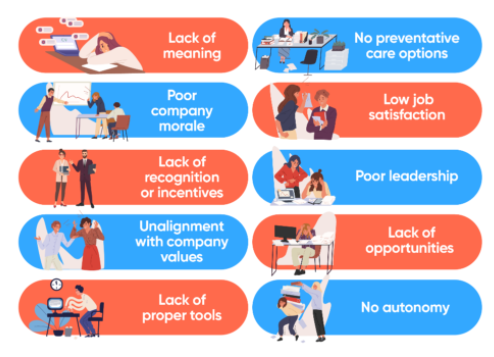
(Source: https://www.betterup.com/blog/boost-employee-morale)
Appendix 2: Considerations for Better Employee Morale

(Source: https://www.gavelintl.com/three-considerations-for-better-employee-morale/)
Appendix 3: Ways of keeping the employee morale positive
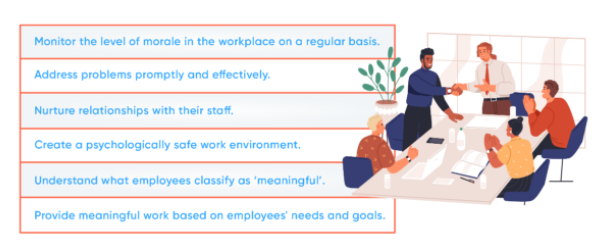
(Source: https://www.betterup.com/blog/boost-employee-morale)
Appendix 4: value of keeping on top of staff morale
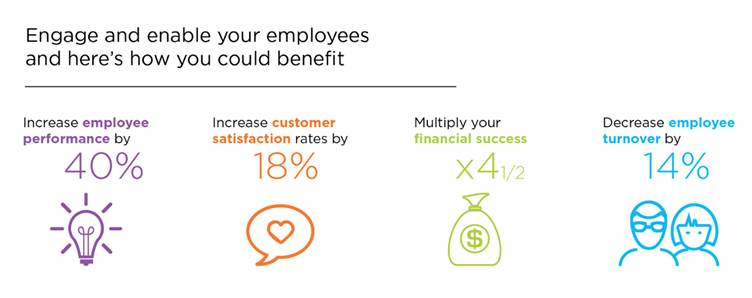
(Source: https://www.interactsoftware.com/blog/employee-morale-is-a-year-round-priority/)
Appendix 5: Survey Questionnaires
|
Demographic Questions
Q.1 What is your gender?
Female
Male
Prefer not to say
Q.2 Which category below includes your age?
18-30
31-40
41-50
51-60
Above 61
Q.3 What is your marital status?
Married
Unmarried
Divorced
Separated.
Q.4 What is your annual household income?
Less than 10000 INR
10k to 40k
40k to 60k
60k to 80k
Above 80k
Morality of the employees
Q.5 Do you feel you get recognition for your work?
Yes
No
Q.6 What is the impact of positive employee morale?
Increasing in productivity in workplace
Reducing staff turnover
Lower Workplace stress
Reducing business costs
Q.7 What causes low employee morale in the workplace of Indian construction industry?
Lack of growth
Lack of communication
Leadership problems
Leadership changes
Q.8 What ways helps in boosting employee morale in construction industry?
Improving staff communication
Giving employee recognition
Giving employee feedback
Giving training to managers
Morality building technique in workplace
Q.9 Do you think morale of good employee helps in reaching a certain level without trust in leadership?
Strongly Disagree
Disagree
Neutral
Agree
Strongly agree
Q.10 “A company’s success or failure is directly linked to its employees’ morale.”- Do you agree?
Strongly Disagree
Disagree
Neutral
Agree
Strongly agree
Q.11 Do you think that the morale of project teams is an important factor when considering the performance of project teams in construction industry?
Strongly Disagree
Disagree
Neutral
Agree
Strongly agree
Q.12 What are the techniques for Building Morale in the Workplace?
Value Employees’ Contributions
Develop Trust
Incorporate Fun Activities
Communication
Team morality and project performance
Q.13 How to recognise employees’ contribution in the workplace of construction industry?
Paid lunch outings
Monetary bonuses
Thank-you notes
Gift cards
Q.14 What factors of employee morale affects in the project performance?
Cost factors
Quality factors
Safety factors
Schedule factors
Q.15 Do you think distributed team settings make a positive impact in enhancing team morality in the construction industry?
Strongly Disagree
Disagree
Neutral
Agree
Strongly agree |